1918: The War Ends, The Disease Does Not

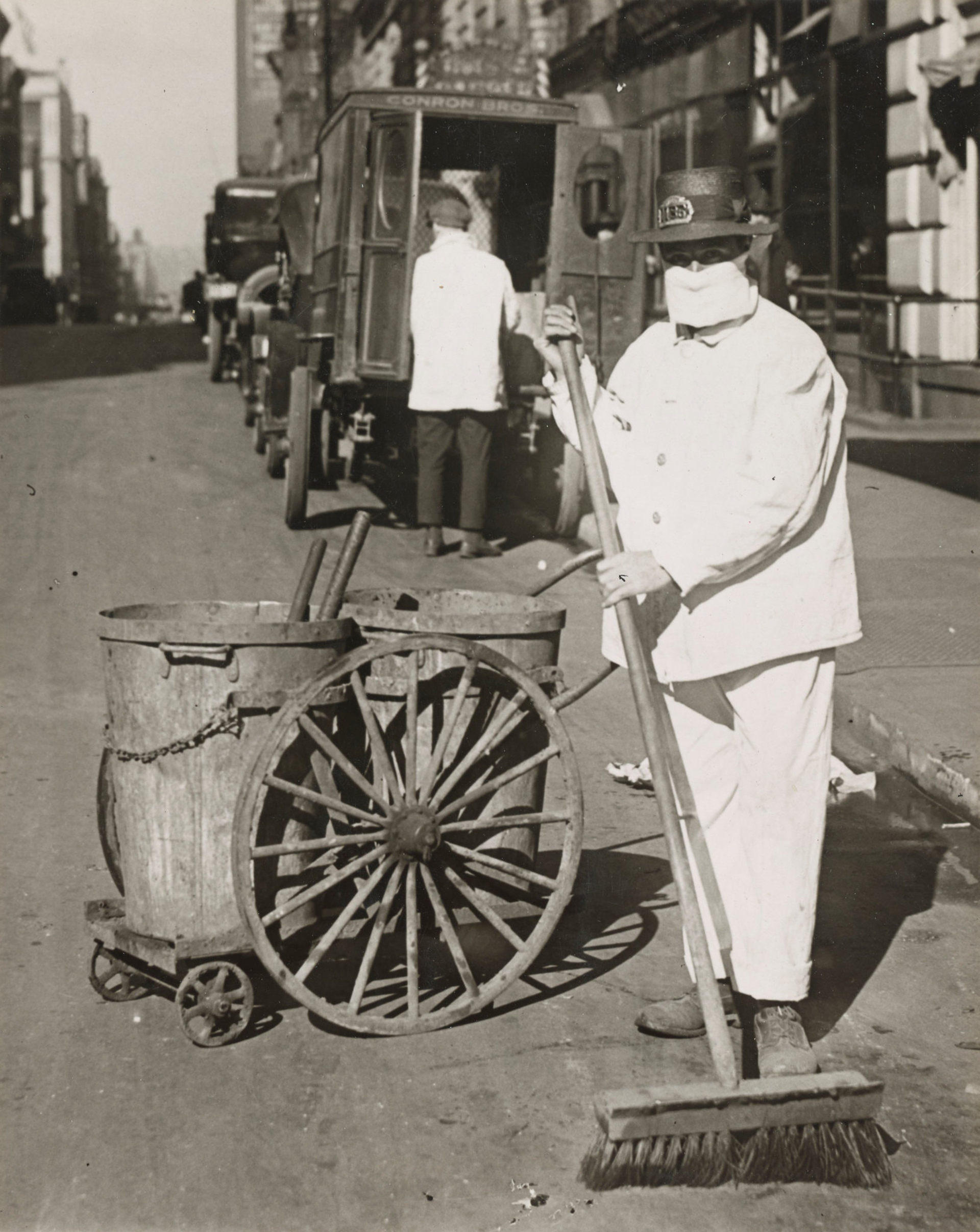
This is part five of an ongoing series on the H1N1 Influenza A virus that killed 675,000 Americans between 1918 and 1919. We are telling the story, as much as possible, through the words of reporters of the time, from either The New York Times archives or newspapers on the East End, such as The East Hampton Star. Independent/National Archive
“When Johnny comes marching home again,
Hurrah! Hurrah!
We’ll give him a hearty welcome then
Hurrah! Hurrah!
The men will cheer and the boys will shout
The ladies they will all turn out
And we’ll all feel gay when Johnny comes marching home.”
— Patrick Gilmore, 1863
In 1918, on the 11th day of the 11th month at 11 AM Paris time, all gunfire ceased across the battlefields of Europe. “The Great War,” “The War to End War,” was over.
The Allies, bolstered by the American troops who started pouring into Europe in April of 1917, were victorious.
The four-line headline across the front page of The New York Times on November 11 read “ARMISTICE SIGNED, END OF THE WAR! BERLIN SEIZED BY REVOLUTIONISTS; NEW CHANCELOR BEGS FOR ORDER; OUSTED KAISER FLEES TO HOLLAND.”
For the first time in over one month, that issue of The New York Times did not carry one article on what was then called the Spanish influenza, or grip, the disease that, according to the Times’s figures, had killed more than 16,000 New Yorkers the month before.
A day earlier, the Times reported, on page 8, “CLEVELAND LIFTS GRIP BAN. Everything to Reopen, as Before Epidemic, This Week. CLEVELAND, Ohio, Nov. 9 – City health commissioner Rockwood announced tonight that because of the reduced number of influenza cases, the ban against theaters, moving picture houses, dance halls, night schools, business colleges, Sunday schools, and churches will be raised completely tomorrow at midnight. The closing order has been in effect four weeks.” Public and private schools would remain closed for another 10 days, The Times reported.
Cleveland’s health commissioner had shut his city down. New York City’s health commissioner, Royal Copeland, had not. Instead, Copeland had ordered businesses to stagger their hours, in order to decrease the density of people crammed together on mass transit during rush hour.
Copeland refused to close the schools, insisting that children were safer there than in the streets of the city’s slums.
The same day Cleveland started to reopen, the Times reported that the 245 deaths linked to what is now classified as H1N1 influenza A virus was a marked decrease from the previous day’s 362 deaths. New cases were down, as well.
Copeland told the Times that “there were approximately 21,000 children who had been made half or full orphans by the Spanish influenza epidemic.”
On November 11, Armistice Day, the Times announced 529 more American casualties, for a total of 69,207. More than half the soldiers and sailors who died in the war died after contracting the influenza.
While the Times did not carry an article on the pandemic that day, the obituaries and death notices on page 15 offer a glimpse into how lethal the disease was.
Spanish influenza was known for two terrifying attributes: its sometimes rapid lethality (there were countless cases of death within 24 hours of contracting the disease) and the number of younger adults it killed.
Though none of the roughly 62 death notices and obituaries on page 15 mention the word influenza, many speak of a quick and sudden death. Many of the younger adults who died were soldiers. Some of those are listed as having been killed in combat. Others, however, died in the military camps, most right here in the states.
“The War to End Wars,” a phrase coined by H.G. Wells, did not end war. It did, however, end the domination of inbred monarchies across Europe. The victorious King George V of England was first cousin to the defeated and exiled Kaiser Wilhelm II. Wilhelm, in turn, was third cousin to Czar Nicholas II of Russia, who had been deposed the previous year during the Russian Revolution. Nicholas II, who was imprisoned and ultimately executed, was George V’s first cousin, as well.
President Woodrow Wilson had never mentioned the influenza pandemic in a speech during the war. That silence continued over the next year, as more Americans continued to die, with the U.S. death toll alone from the disease recorded at roughly 675,000 people. It was Wilson’s belief that speaking of the disease would weaken American morale.
Now that the war was over, Wilson had a vision. He would go to Europe and help craft a League of Nations, an organization where the leaders of the new nations emerging around the world could sit down at one table. There would never be another war again. Morale had to be maintained to achieve that goal. His silence continued.
On Friday, November 15, the weekly East Hampton Star’s front page reported “Germany’s Downfall Fittingly Observed by Every East Hampton Citizen.”
Across the East End of Long Island, the numbers of deaths and new cases was rapidly decreasing.
It was time to reopen. On page 5, on November 15, the Star ran the following: “Edward’s theater opens tomorrow night after being closed six weeks on account of the epidemic. A feature picture, ‘Crashing Through to Berlin,’ will be shown.”
The viral disease known at the time as Spanish influenza had already washed across the country twice, a first wave in early 1918, then the second, during the late summer and fall.
The war was over. It was time to return to normal.
But the disease had not gone away.
Next week, a return to normalcy, with tragic results.

Vetted Hamptons Resources