How Bridgehampton Turnpike Went from Dirt Toll Road to Major Thoroughfare
 By Dan Rattiner
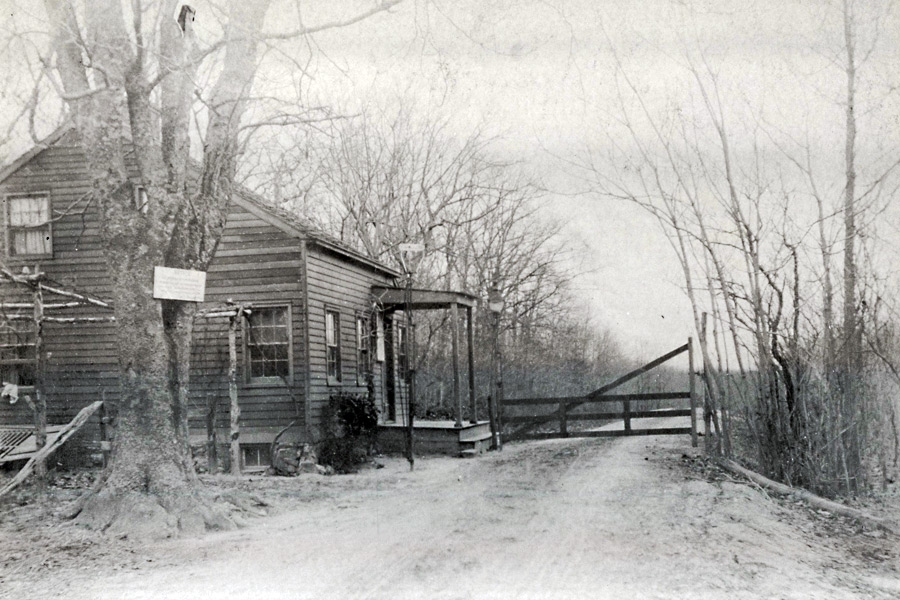
The Bridgehampton Turnpike connects Main Street Bridgehampton to Sag Harbor. It runs for almost six miles through the woods nearly straight as an arrow and is one of the oldest roads in the Hamptons.
It was created in Colonial Times as a dirt track because the colonists in the Hamptons needed to import and export goods to Europe, and the best nearby sheltered dock was Long Wharf on the shore of Sag Harbor. The Turnpike turns off toward Long Wharf at the place where a wagon hauled by horses along Hampton Main Streets was closest to this dock. The turnpike was then, privately owned as a wide dirt track owned by some citizens.
The Turnpike was also a toll road, the only one in the Hamptons before or since. There was a bar across the road. Pay the fee to the man manning the toll booth – so much for a cow, a sheep, an oxcart, a carriage. He’d take the money in shillings or pence – see the big sign for the prices – and then raise the bar to let the traveler through.
The fees charged to those using the turnpike were used to police it and keep it free of branches, mud and potholes. And we know that it stayed in business from about 1680 to 1740. After that, it was free of passage. Use at your own risk.
The place where the Turnpike joined up with Main Street soon became a busy intersection. A tavern was built on the northeast corner of the intersection sometime around 1750. Called Wick’s Tavern, a historic sign marks where it once was. The local militias met, drank and planned the campaign to free Long Island from the iron grip of the English at Wicks. After the revolution, the Turnpike continued on. Several grand mansions were built by wealthy attorneys, judges and merchants at the intersection. One today is the Topping Rose House. Another is the Nathanial Rogers House, occupied by the Bridgehampton Museum. At the other end, Sag Harbor prospered as a whaling port until around 1850. And after that, Sag Harbor became a factory town, successful through to the end of the First World War.
Around 1920, the great War Memorial was built in the middle of the street at this Bridgehampton intersection where Main Street meets the Turnpike. The soldiers of later wars were honored around the base of the memorial as they occurred: World War II, Korea, Vietnam.
Surrounding this intersection, farmers thrived planting potatoes. And for some reason, motor vehicles became important. Several race tracks were nearby. And six gas stations repaired trucks, cars and tractors along the four blocks of Main Street. In 1940, still in the depth of the Depression, Wick’s Tavern got sold so the property could be home to still another gas station. The Tavern would be torn down, but before it was, teams of men came to Bridgehampton as part of a WPA project and made accurate architectural drawings of Wick’s Tavern so it could be rebuilt elsewhere after being torn down. There was talk it could be rebuilt on the militia grounds across the street behind where Almond Restaurant is today. But it never was.
As recently as 15 years ago, I saw stacked under a tarpulin in a field just east of the Nathanial Rogers Mansion rotting beams of wood that I was told were the remains of Wicks Tavern. But now they are gone.
Have a East End real estate story? Want to share? Text us at 516-527-3566. We’ll call you back, and then write it up for this weekly column. –Dan
Vetted Hamptons Resources