Freed Israeli Hostage Delivers Powerful Account of 2 Years in Captivity

On an overcast Sunday morning in late February, the first few scattered flakes of what would become one of the most intense snowstorms the East End had ever seen had already begun to fall.
The forecast – which turned out to be accurate – was dire. And the snow was expected to start hammering the region within an hour or two. Given that backdrop, no one would have blamed the organizers of a special event at The Center for Jewish Life in Sag Harbor for postponing their plans.
But despite the impending force majeure, the event went on as scheduled.
“Surviving 738 Days in the Tunnels of Gaza” would have been a monumental and moving experience regardless of where or when it was held. But given what the threatening skies above the venue were about to unleash, the events of the day felt even more powerful.
Yosef Chaim Ohana, a then-23-year-old Israeli, was abducted at the Nova music festival near the Gaza border on October 7, 2023 and held by Hamas for over two years. Ohana was finally freed with 19 other hostages in October of 2025.
Speaking sometimes in English and sometimes in Hebrew, he delivered a vivid account of his experiences. His story spanned the moments leading up to his capture and the endless days of his imprisonment, first in various apartments and safe houses, then in the dark tunnels underneath Gaza.
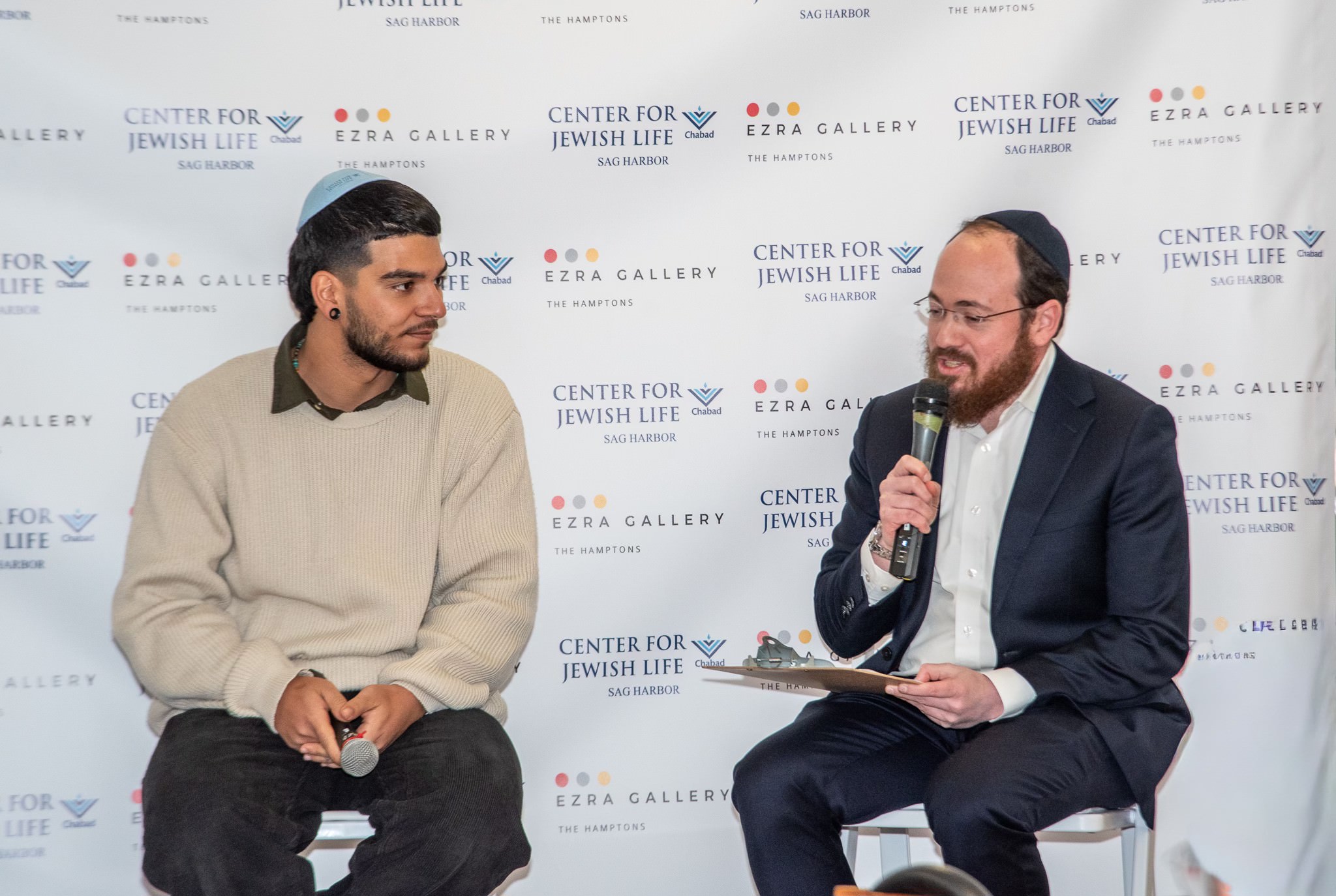
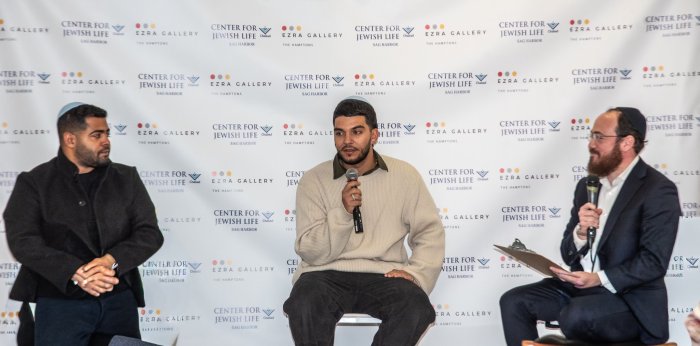
Ohana was joined onstage by Rabbi Berel Lerman, spiritual leader of the Center for Jewish Life, who served as the event’s moderator. Ohana’s good friend Daniel Sharabi shared the stage as well. Sharabi helped Ohana hone his thoughts in English and also translated the Hebrew portions of the presentation for event attendees.
In addition to helping Ohana with his English, Sharabi was also clearly there to provide moral support.
As Rabbi Lerman noted in his opening remarks, Sharabi had attended the Nova festival with Ohana. While the fates decided that Sharabi would experience the horror of a terrorist attack, he would be spared the anguish of captivity.
Comparatively speaking, Ohana would not be nearly as lucky.
Lerman added that In the months that followed Ohana’s abduction, Sharabi had served as a tireless advocate for his friend’s release, even lecturing at the Center for Jewish Life, where he spoke at length about Ohana’s plight.
“At that point, to believe the hostages would be released was very far-off in our imagination,” Lerman said, referencing Sharabi’s visit to the Center a year earlier. “But here we are. Not only have the hostages been released, but Yosef Ohana is visiting our community. The person that we wished and prayed for – that he should come back alive – is here to tell the tale. I think that, in and of itself, is a great miracle.”
Ohana noted that his presentation in Sag Harbor marked the first time he had spoken at length about his captivity in English. While his syntax and accent were clearly those of a non-native speaker, he had no trouble communicating the visceral nature of his ordeal.
Audience members were visibly emotional as Ohana discussed scars that will last for the rest of his life: He described physical and psychological torture, but also daily prayers and “conversations” with God – as well as endless hours spent reflecting on the nature of existence and faith.
Ohana also reflected on perhaps the most damaging aspect of captivity – an experience only those who have been held against their will and tortured by hostile forces can comprehend:
What does it feel like to know that any day might be your final day on Earth?
From the first day of his captivity to his last, Ohana endured that level of existential anguish.
It began when he and seven other festival-goers found themselves trapped and held at gunpoint by Hamas terrorists.
“We held hands – eight of us. We were waiting,” Ohana remembered. “Say goodbye to this world,” he thought. “We’re all going to be dead in a few minutes.”
His group was fired upon at point blank range. The man directly next to Ohana was on the phone with his mother as he was executed, still holding Ohana’s hand.
Ohana was the only survivor of the group of eight. To this day, he doesn’t know with any degree of certainty why his attackers chose to let him live.
His initial days in captivity were equally terrifying.
“In the beginning, when they dragged me into Gaza, I was thinking that they weren’t going to hold me as a hostage,” he remembered. “I thought that maybe they were going to give me to the civilians or other people and [have them] kill me.”
On one particularly harrowing day, his captors appeared to believe that the Israeli Army might be preparing to storm an apartment near where Ohana was being held. He was placed with other hostages in a bathroom with multiple grenades. His captors made it clear that if the Israelis penetrated the apartment, he and his fellow prisoners would be used as human booby traps and blown up with his would-be liberators.
Before being transferred underground to the tunnels, Ohana spent the first eight months or so of his captivity moving from apartment to apartment. Then he was taken below the streets of Gaza. The danger was still ever-present, but its nature had changed.
“Above ground, you always worried that at any second, an airstrike would hit the building. If that happens, you’re done, you’re finished,” he said. ”Underground, you didn’t know if you would have enough air to breathe. Also, the tunnel could collapse and you would be stuck there forever.”
In the tunnels, Ohana was held with other hostages in tiny spaces, often only a few meters wide. Physical torture was common. The prisoners were repeatedly tied up, beaten and starved.
The physical abuse visited on the hostages has been widely documented in excruciating detail. And Ohana, as is his duty, detailed the brutality in stark terms.
But the psychological torture was as least as devastating.

“For 11 months in the tunnels, I was disconnected from the world,” Ohana said. “I only knew the lies they were telling me.”
At various times, his captors told him, for example, that Hamas had taken the city of Tel Aviv, or that 15,000 Jews had been killed in a raid. It was impossible to separate truth from fiction.
Other forms of psychological manipulation were even more insidious.
In a prepared statement in English, Ohana read the following as event attendees sat in stunned silence, struggling to process what they were hearing (his statement has been shortened and lightly edited for clarity):
“During the ceasefire, a year and a half into the war, there were six of us left in the tunnel. Suddenly, one of the captors called us together, which was something that had never happened before. Usually, they avoided us – our faces, our eyes, our humanity.
We walked toward him, unsure what to expect. He ordered us to sit. The air was heavy, silent. For nearly half an hour, we spoke about the war. How right they were, how evil our army was.
Then he said, ‘Now we must take revenge. You will choose three people to die, to be shot in the head, and three to be wounded. Choose correctly, or I will choose for you.’
The following hours were hell: arguments, whispers, looks that said everything and nothing, silence that screamed total uncertainty.
Death felt near. Not distant, but beside us, one step away, leaning on our shoulders.
In the end, it did not happen. But the fear stayed. The knowledge of how close the end was, just one breath away.
But after that day, something shifted. Life itself felt like a gift. Every second counted: another breath, another smile, a quiet moment, a sweet taste of something. Because we had seen how easily it could all disappear.”
When asked to describe how we kept his sanity over 738 excruciating days of physical and psychological abuse, Ohana cited his faith and his values, which he identified as love, peace and compassion.
“They already stole my body,” he said, “But if I let them steal my soul, I’d be in captivity for life.”
Vetted Hamptons Resources