Meet Lois Pope, the Pope of Disabled Veterans
 By Todd Shapiro
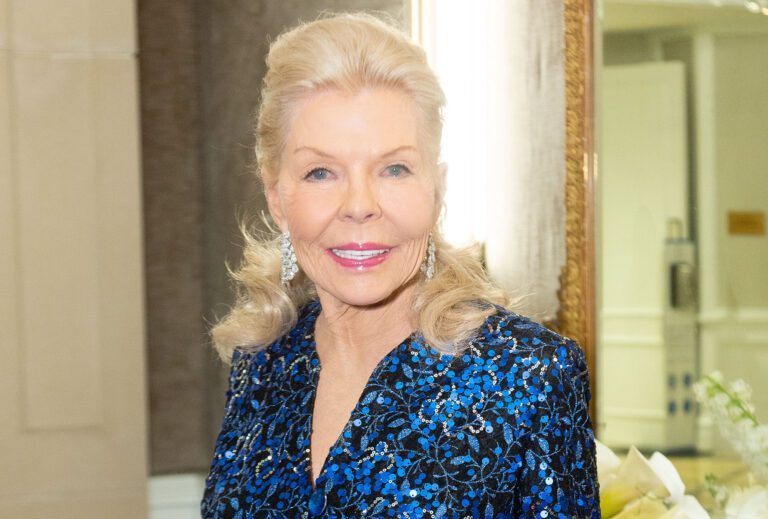
One of America’s leading philanthropists, Lois Pope is recognized as the country’s foremost advocate for veterans and especially disabled veterans, earning the moniker, “The Pope of Disabled Veterans.” She created and spearheaded the legislation, building, and endowment of the American Veterans Disabled for Life Memorial, which was dedicated on October 5, 2014, in Washington, D.C. as the nation’s first permanent public tribute to the four million living disabled American veterans and all those who have died.
In 1993, Pope founded two nonprofit organizations, Leaders In Furthering Education (LIFE) and the Lois Pope LIFE Foundation, to help and improve the lives of the voiceless and vulnerable in our society. LIFE’s Annual Lady in Red Gala in Palm Beach, Florida, has raised millions of dollars to help the less fortunate, including those who are disadvantaged or forgotten because of disabilities, socio-economic status, neglect, age, abuse, and other barriers.
A mother, grandmother and great-grandmother, Pope has rescued many dogs and cats. A resident of Manalapan, Fla., she has trained for and completed five marathons, but she is best-known for her charitable endeavors. She spoke with Dan’s Papers about what drives her and more.
A Conversation with Lois Pope
What is one accomplishments you would share widely with others?
One accomplishment that means the most to me is creating the American Veterans Disabled for Life Memorial in our nation’s capital.
For 18 years, I put everything else aside to make sure our nation would finally have its first permanent public tribute to the more than four million living disabled American veterans, and to all those who have died from their service. These men and women sacrificed so much for our freedom, yet, for far too long, their stories and sacrifices were not fully recognized.
I was determined that their courage and resilience would be honored in a way that every American could see and understand. The memorial stands as a place of reflection, gratitude, and education — a reminder that the cost of freedom is very real.
If there is one accomplishment I would share widely, it is that we as a nation finally fulfilled a promise to those who came home from war forever changed, and ensured their sacrifices will never be forgotten.
What would you tell people who are just getting started in philanthropy?
You don’t have to dedicate your entire life to philanthropy to have an impact. If everyone chose just one cause and gave a little of their time or energy, perhaps the world would be a much better place.
What caused you to get involved in philanthropy?
I grew up during wartime, and as a child I saw firsthand that many people were struggling and in need. Those experiences stayed with me.
But more than anything, my parents set the example. From an early age, I watched them quietly give to those who needed help — whether by providing food to a family struggling or offering support to someone going through a difficult time. They didn’t do it for recognition; they did it because it was the right thing to do.
That example created a standard in our home. It taught me that when you can help someone, you should. That belief has stayed with me throughout my life and truly became the driving force behind my commitment to philanthropy.
What has been most surprising about philanthropy?
The most surprising aspect of philanthropy, for me, is that there really are no surprises. When you work closely with people and causes for many years, you come to understand both the challenges and the incredible resilience of the human spirit.
There will always be needs in the world, and there will always be people who are struggling. But there are also people who are willing to step forward, help others, and make a difference.
Philanthropy has simply reinforced what I have always believed—that compassion, generosity, and commitment can truly change lives. It’s not about surprises; it’s about continuing the work and never losing sight of the people you’re trying to help.
There is a lot of debate about the role of government vs society in charitable efforts. How would you describe the role of each and the relationship between them?
We are truly blessed to live in a free country where individuals can support the causes that matter most to them. The government certainly plays an important role in providing structure, services, and support for many of society’s needs. But individuals and private philanthropy also play a vital role.
One of the great strengths of our country is that people can give directly to charitable organizations they believe are making a difference — whether that’s in their own community or far beyond it. Philanthropy allows citizens to respond quickly to needs, support innovation, and bring attention to causes that might otherwise be overlooked.
In my view, it’s not a matter of government versus society. The two should complement one another. Government can provide the framework, but individuals, families, and charitable organizations bring compassion, creativity, and personal commitment to helping others.
In the last 10 years, do you find people are more, or less, inclined to be charitable?
In the last 10 years, I actually found that people are more inclined to be charitable. I see more individuals stepping forward, becoming involved in causes, and wanting to make a difference in their communities and beyond.
What encourages me most is that people are not only giving financially but also giving their time, energy, and voices to support important issues. Many are volunteering, raising awareness, and helping organizations grow their impact.
To me, that shows the very best of our country — that people genuinely care about one another and are willing to help when they see a need.
How can we help children to be more charitable?
The best way to help children become more charitable is by setting an example. Children learn far more from what they see than from what they are told.
If they watch their parents, grandparents, and teachers helping others, supporting charitable causes, or volunteering their time, those values naturally become part of who they are. It teaches them compassion, gratitude, and a sense of responsibility to others.
Even small acts — donating food, helping a neighbor, volunteering as a family — can show children that giving back is simply a normal and important part of life. When we lead by example, we help raise the next generation to care about the world around them.
Was there one thing that turned you from a person who thought about charitable acts and someone who actively participates?
There wasn’t one single moment that changed me from someone who thought about charitable acts to someone who actively participates. This is simply who I am. Helping others has always been a natural part of my life.
I feel very blessed to be in a position to be a philanthropist. From a very early age, I always wanted to give and help those in need. It’s never been about recognition — it’s about seeing a need and doing whatever I can to make a difference.
For me, philanthropy isn’t something separate from my life. It’s simply the way I choose to live it.
You’ve had some very successful fundraisers. What are the principles that help make a successful fundraiser?
A successful fundraiser like LIFE’s Lady in Red Gala begins with a total commitment to the cause and a willingness to work very hard. People respond when they see genuine passion and dedication. If you truly believe in the mission and are prepared to give your time and energy to it, others will feel that sincerity and want to be part of it.
Another important principle is communication. It’s essential to share the organization’s story, mission, and the impact of its work with as many people as possible. Working with the press and media helps bring attention to the cause and helps others understand why it matters.
When people clearly see the purpose and the need — and they feel the commitment behind it — they are much more likely to step forward and support the effort.
In addition to your other activities, you’ve worked very hard regarding disabled veterans, including the PBS documentaries Debt of Honor and VA: The Human Cost of War. Both were directed by Emmy Award-winning director Ric Burns, younger brother of acclaimed documentarian Ken Burns. How would you characterize these films?
For me, both Debt of Honor and VA: The Human Cost of War were never just documentaries — they were a moral obligation. For far too long, our nation’s disabled veterans have carried the physical and emotional wounds of war quietly, and many Americans simply did not know the depth of the challenges they face when they return home.
These films are about truth, accountability, and compassion. They tell the stories of brave men and women who served our country and then struggled to receive the care and respect they deserved.
These films were my way of sharing what I knew and what I had witnessed, and of giving veterans a voice that could no longer be ignored.
At their core, these documentaries are about honoring a promise. When our service members risk everything for our freedom, we as a nation owe them not just gratitude, but action. If these films helped open eyes, spark conversation, and push for reform, then they achieved exactly what I hoped they would.
Todd Shapiro is an award-winning publicist and associate publisher of Dan’s Papers.
Vetted Hamptons Resources