Evelyn Alexander Wildlife: A Year of Record Admissions & Rising Challenges
 By Willow DuBrovin
At the Evelyn Alexander Wildlife Rescue Center, 2025 has become the busiest year the staff has ever seen. A total of 2,500 animals were admitted for care, reflecting both the growing pressures on local wildlife and the nonstop dedication of the people working to protect them. Of those admissions, 674 patients were released back into the wild, including 366 birds and 305 mammals returning to the beaches, backyards, and woodlands they came from. Another 140 animals remain in care or were transferred to specialized facilities.
With the annual report complete, the EAWRC now has a clearer understanding of the issues affecting wildlife most. Some of the most preventable cases came from unnecessary human intervention.
A total of 52 birds and 37 mammals were brought in by people who assumed something was wrong, even though many were healthy fledglings or young rabbits waiting for their mothers. These animals often arrive stressed and frightened, despite never needing rescue at all.
The largest source of injuries remained vehicle strikes. A total of 173 birds, 173 mammals, and 30 reptiles were admitted after being hit by cars. Another 20 young mammals were brought in orphaned after their mothers were struck.
These are among the most difficult cases for staff members, because so many could have been avoided by slowing down near wooded areas, especially at dawn and dusk when wildlife movement peaks.
Window strikes continue to send injured birds to the EAWRC. A total of 76 birds arrived after hitting reflective or brightly lit windows, which appear invisible to them. Even simple decals or screens can significantly reduce these injuries. Another 25 birds became entangled in fishing line or hooked by stray gear, so EAWRC employees remind fishers that their single piece of discarded equipment can cause serious harm.
Dog-related injuries also remained a substantial issue. A total of 12 birds and 104 mammals were hurt by dogs, often during quick off-leash moments that turned dangerous in seconds. These cases frequently involve young wildlife that never had a chance to escape.
But no trend was as alarming as the rise of canine distemper among Long Island raccoons. In 2025, the EAWRC admitted more than 500 raccoons, triple last year’s number.
More than 400 had to be euthanized, since canine distemper has no cure and progresses quickly. The illness spreads through respiratory secretions such as contaminated water bowls, which is why the EAWRC urges residents not to leave bowls outdoors.
Common signs include walking in slow circles, wandering during the daytime, discharge from the eyes and nose, and unusual lack of fear of humans. Every raccoon admitted is now vaccinated, especially babies, to help protect future populations.
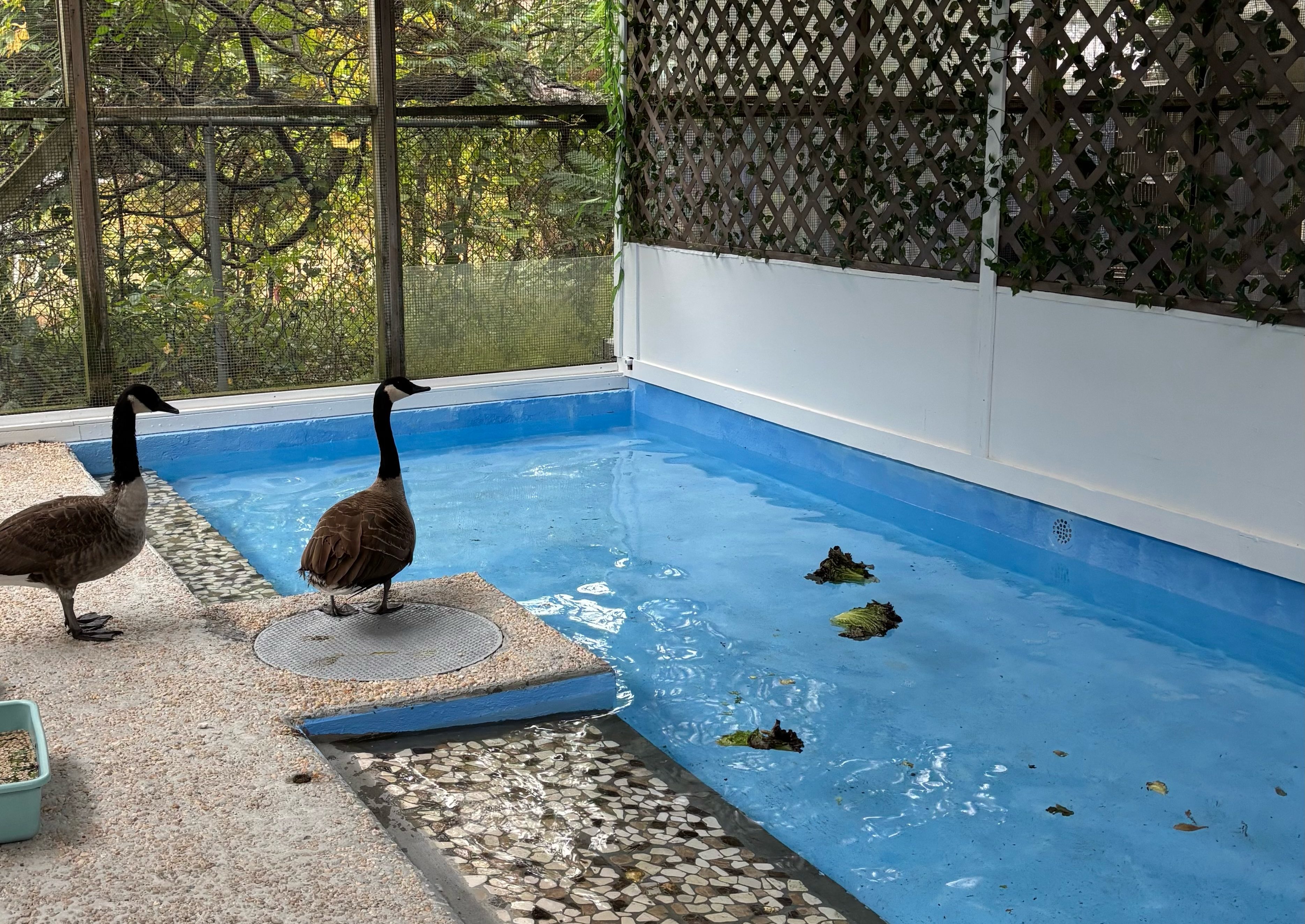
Despite these challenges, this year brought major improvements. The new Triage Center has proven essential, the rescue van saw upgrades, and the waterfowl pens were fully redesigned.
Executive Director and Licensed Wildlife Rehabilitator Kathleen Mulcahy said, “I’m very proud of our staff this year, as we had increased difficulty due to the record number of animals.” The EAWRC operates with a core team of 11 staff members, increasing to 15 during the summer, yet the workload remains intense. “The staff has really been through a lot, they help hundreds of babies with feedings by taking babies home in the middle of the night so that they can be fed at 2 a.m. and 6 a.m., and it was stressful.” Mulcahy adds that, “We are always shorthanded and short staffed, and our wonderful volunteers have been providing a well-needed cushion, but it’s still very hard. It’s heartbreaking when you can’t save a beautiful animal.”
Still, Mulcahy highlighted the progress made.
“Our Triage Center has been doing wonders, and our staff have been releasing hundreds of animals all the way as far as Montauk easily because of it.” She explains, “They didn’t have to make the stressful journey over here, and many were able to be released within a day or two.” The EAWRC is also celebrating a major milestone. “It’s been a tough but amazing year, we have reached a record number of 78% animals surviving after a couple days of treatment, which shows how we are dedicating our time and resources to focus on the animals that have a great chance of rehabilitation success,” Mulcahy says.
Mulcahy expresses deep gratitude for community support, “We are so thankful to our sponsors because we have also raised a record number of just under a million dollars this year, as our supporters are very generous and we are so thankful for them.” With this funding, the EAWRC is preparing for long-awaited expansions. “We have future plans of building an on sight educational center, and hopefully rebuilding the hospital as well. This educational center will have interactive screens and activities, and indoor and outdoor habitats for our mammals that will be integral to the educational center and programs.”
The annual report serves as both a record and a reminder. Staff members encourage locals to slow down on back roads, supervise and vaccinate their dogs, keep outdoor spaces free of hazards, and give young wildlife room, so that Long Island can help ensure that fewer animals need rescue in the first place.
The Evelyn Alexander Wildlife Rescue Center is located at 228 West Montauk Highway, Hampton Bays. It can be reached at 631-728-4200, and animal emergencies can be reported at 631-728-WILD (9453). The EAWRC is open 9 a.m. to 5 p.m. seven days a week. Visit wildliferescuecenter.org for more information.
Vetted Hamptons Resources