Former Grumman Calverton Airfield Eyed for Massive Indoor Cannabis Grow
 By James Bernstein
Grumman Corp.’s giant flight-test facility in Calverton was always corporate and straight laced – a place where Navy and Marine jets were tested for battle. But imagine this place as a spot where marijuana is grown?
Once, Navy F-14 fighters and A-6 bombers roared off its runways, as engineers and corporate managers ran the test numbers. The Calverton field has been closed since 1996, its hangars and buildings empty, rusted and in disrepair. Grumman, formerly Long Island’s largest employer and the Navy’s major supplier of jets, was sold to Los Angeles-based Northrop Corp. in 1994.
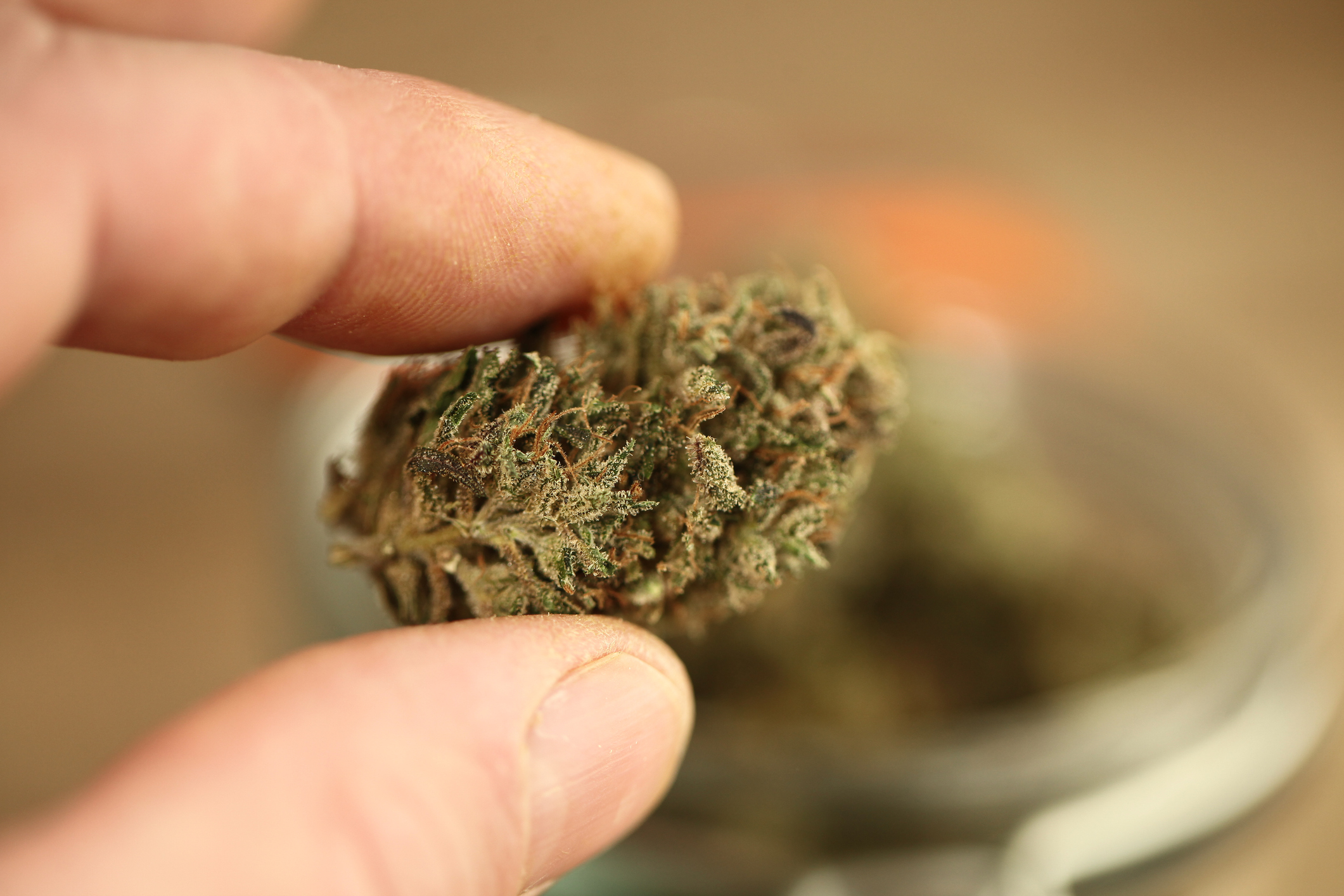
Can at least a part of the Calverton field be developed into something out of yet another entirely different era? A Manhattan-based real-estate company, Signature Partners, thinks so. It is the field’s new owner, and as such, has submitted a preliminary application to develop the property as an indoor cannabis grow facility. Signature Properties bought the land at the end of 2025.
To an older generation of Long Islanders, that may raise a lot of eyebrows. But Signature is dead serious. It submitted its application at a meeting of the Pine Barrens Commission earlier this winter.
The company needs what is known as a hardship waiver since the property in question is in the Central Pine Barrens Core Preservation Area. The project is considered new development.
“We want to be clear that we are not in the cannabis business and are just providing a suitable facility to grow plants indoors under controlled and secure conditions,” Andrew M. Weiss Jr., Signature Partner’s CEO, said in a letter to the commission. “Furthermore,” he added, “no retail sales will be permitted.”
In its papers to the commission, Signature Partners said its project would result in “a sustainable and environmentally compatible three-building campus, in a park-like setting, in harmony with its natural surroundings.
“The re-development will be non-invasive, preserving what currently exists and not expanding or changing the envelope of any existing structure,” the firm’s papers continued. “Furthermore, the project design will include safeguards to control noise, smell or light emission.”
“We will do nothing to injure or impair the existing majestic pine trees and will do our best to be stewards of the land, vegetation and associated wildlife,” Signature Partners wrote.
Tim Motz, a spokesman for the commission, told Dan’s Papers that a hearing on the proposal might be held in March or April.
Aside from the commission, Signature must make an application to the town of Riverhead, since the property is in the town’s Natural Resources Protection Zoning District, which allows agricultural production. Under New York State law, cannabis is considered an agricultural crop. The plan would need Riverhead Town site approval.
In a statement to the media, Signature Properties said that the hearing in January “was simply to determine if the Central Pines Barrens Board had jurisdiction. We will engage with the town following the Central Pine Barrens process.”
The Pine Barrens encompasses over 100,000 acres of diverse ecosystems such as swamps, bogs and grasslands. It all allows for hiking, biking and hunting across state and county-managed lands.
It was established by the 1993 Pine Barrens Protection Act and is Long Island’s largest natural area and its last remaining wilderness. Key to the Pine Barrens is that it overlays and recharges a portion of federally-designated sole source aquifer for Long Island’s drinking water.
Signature Partners has identified three buildings on the property that would be used for cannabis cultivation, totaling 126,500-square-feet and would include 337 parking spaces.
Signature Properties said that repairs to the buildings would include interior renovations, parking lot resurfacing and improvements to septic systems, fire sprinklers and other utilities. But it said that some of the buildings may have to be demolished due to mold and structural problems.
New York State’s Office of Cannabis Management says the state has awarded “hundreds of conditional and permanent cultivation licenses across the state…with approvals to grow cannabis.”
Some are on Long Island’s East End, and there are many others in upstate New York, but many are relatively small and, according to experts, none would be the size of the one proposed for Calverton. Licensed growers in New York State sell through legal dispensaries, of which there are several on Long Island, including one of the best-known, Curaleaf Medical Dispensary, which has locations in Nassau and Queens counties and the Hudson Valley.
Vetted Hamptons Resources