Bruce Lieberman Talks Bridgehampton Museum Show & More

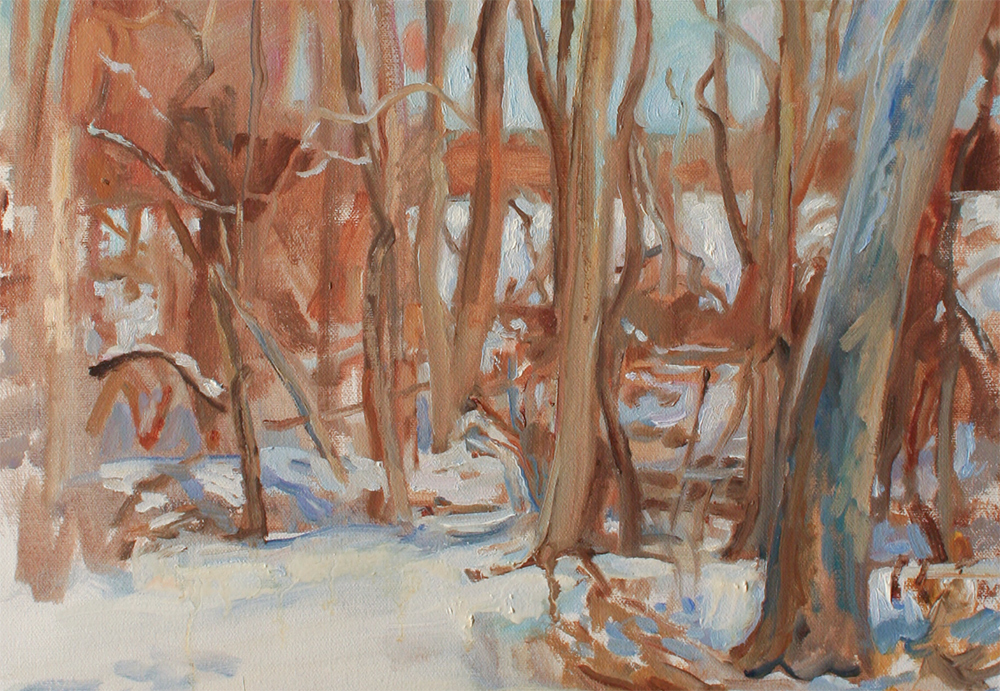
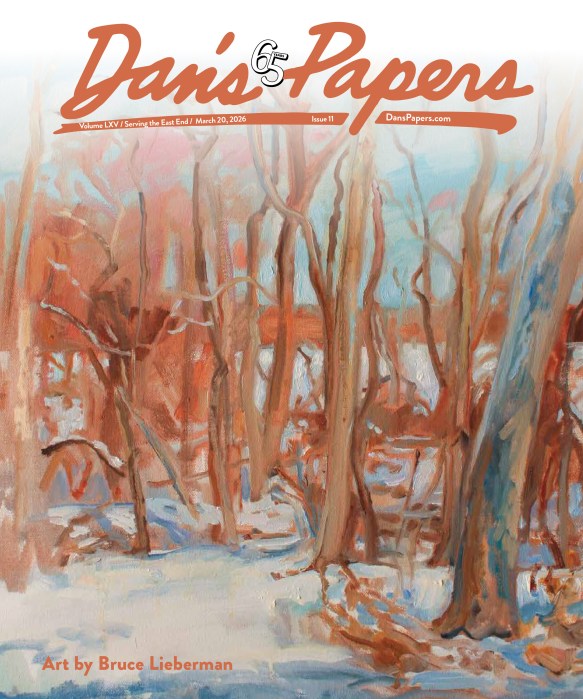
A true painter’s painter with a talent for capturing the world in rich, gestural compositions, Bruce Lieberman discusses this week’s cover painting and his new show, Bruce Lieberman: Paintings, on view now through April 11 at the Bridgehampton Museum (Nathaniel Rogers House, 2539 Montauk Highway).
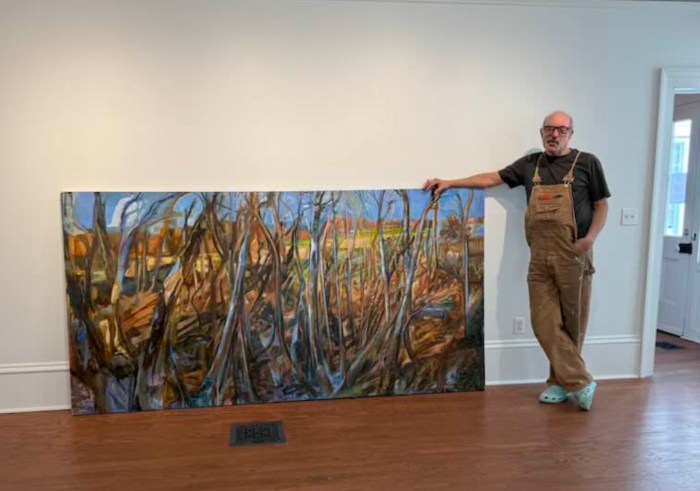
A Conversation with Bruce Lieberman
Tell me about this cover painting and what inspired it?
I work from life and this view offered me something that I could sink my teeth into. This was beautiful and resonated with me, but I’m wasn’t thinking, “Oh, that is so pretty I have to paint it.” Capturing a sense of reality and a beautiful moment is a component, and a side effect of sorts. More importantly, it looked like it would make an interesting painting. It gave me an opportunity to compose using the relationships of the color and shape that were there already. It is about nailing the soul, energy and the poetry of the thing.
You have a new show at the Bridgehampton Museum. Can you talk about that exhibition?
The show has a group of paintings that date back into the early ’90s — a survey/retrospect of sorts. Mostly large landscape paintings done in and around my studio and garden. They’re a kind of love song to the natural world — and about making paintings.
In a certain way my work is always autobiographical and there is a very strong argument to be made that my work is an environmental statement. There is that somewhat embarrassing and cliché schtick about the “mystical” aspects of nature. “Dude, man, bro, like feel the vibrations and the rhythms of mother ocean’s energy, man.”
That has always been there. But my work is about many things at once and mostly about painting — an intellectual game of organizing chaos. That is sort of all painting is.
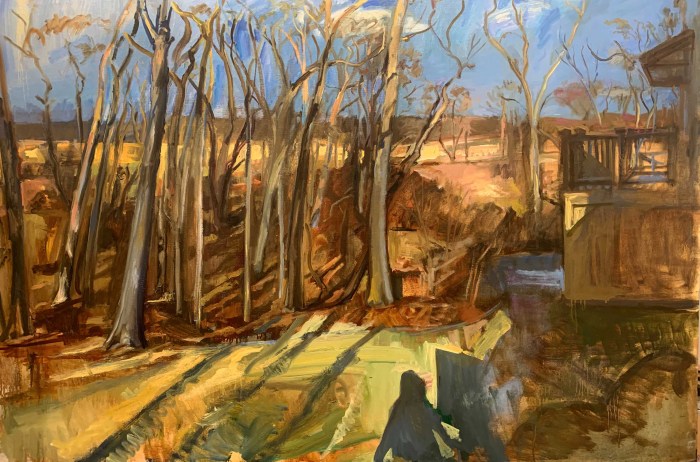
I’m particularly drawn to your painting called “Groundhog Day” and the narrative attached to that shadow. It makes this piece truly unique in the show. Can you talk about it?
Thanks! That’s very nice to hear. I really appreciate that. It’s a self-portrait. Done on Groundhog Day, and like spring and the groundhog itself, it is about rebirth. What interested me was that sweeping vista, the shadow shapes made the space look incredibly deeper and created all these thrilling possibilities. That is the fun part.
My paintings are about paint and painted space. Shapes or areas of colors moving and/or dancing across the flat surface. The fun part is to keep the shapes moving, breaking that flatness and alluding to deep space while always still remaining flat!
On one level, I think of painting the landscape as turning my back on art-worldly fashion. I think they are beautiful, would look good decorating anything and anywhere, but that is nothing I care about. My goal is a sort of un-self-conscious purity, channeling my inner Corot. So, as with all my paintings, this one is based on the strict observation of nature while making absolutely no claim or goal to become an illusion of the real. It is the opposite. They claim to be paintings rooted in the rich, exciting history of painting. They are music or poems — about nature, about humanism — a rejoicing in the process without pretense, guise, or slickness.
How do you decide what you’re going to paint? Walk me through your process starting a new composition.
I touched on some of this. If I were to begin something new and I don’t have a particular idea, I look for something that will paint itself — something I can sink my teeth into. Painting is a language, and I’m thinking in that language when I look for a motif.
Making paintings is what I do and enjoy. My work is derived from serious observation of the real world — that is what I use as a starting point for composing. For me, it is just breathing, rather improvisational, like jazz music. An arrangement weaving a rich fabric of elements, layers of ideas and sensations.
Even if it begins outside on location, I might work for years on a painting. Sometimes it comes together in a few days, but other times it doesn’t play too nice. I might fight with it for years — and hopefully I win the argument. I guess it always ends in compromise. No, I think the muse wears the pants in this family, and I just do what I’m told.
I don’t think this is what you meant by process, but for kicks I’ll tell you. The process begins in my head. I flip that switch so I can see it all as flat. Then I loosely do a rough drawing of the flat shapes with charcoal, then I ignore that and go over it in ink. Once again ignoring everything, I cover the surface with big, flat, foggy areas of color. These I break down into smaller flat shapes of color — more refined, analyzed, destroyed and adjusted — until, voilà, done! Or just I give up.
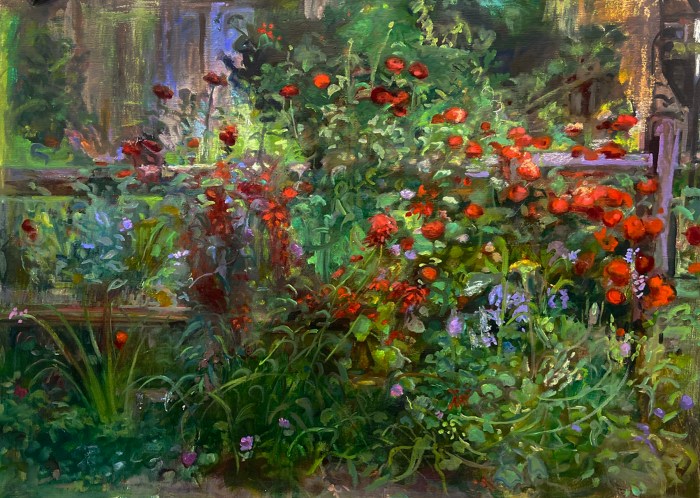
Is there anything you’d like to paint or a subject you’d like to approach that you have yet to explore in your career?
I have done/do most things I cared to do. I guess I could benefit from going somewhere to paint, but I like being in my studio and home.
Aside from the Bridgehampton Museum (bridgehamptonmuseum.org), where can people find your work regularly in-person or online?
Currently, I have paintings in a few group shows here and there, and I’m also in a show at the Nassau County Museum of Art in Roslyn. It is on loan from the Center for Figurative Painting in New York City. Or you can visit brucelieberman.com
Vetted Hamptons Resources