Buckmister Fuller Dome at LongHouse Collapsed Under Snow

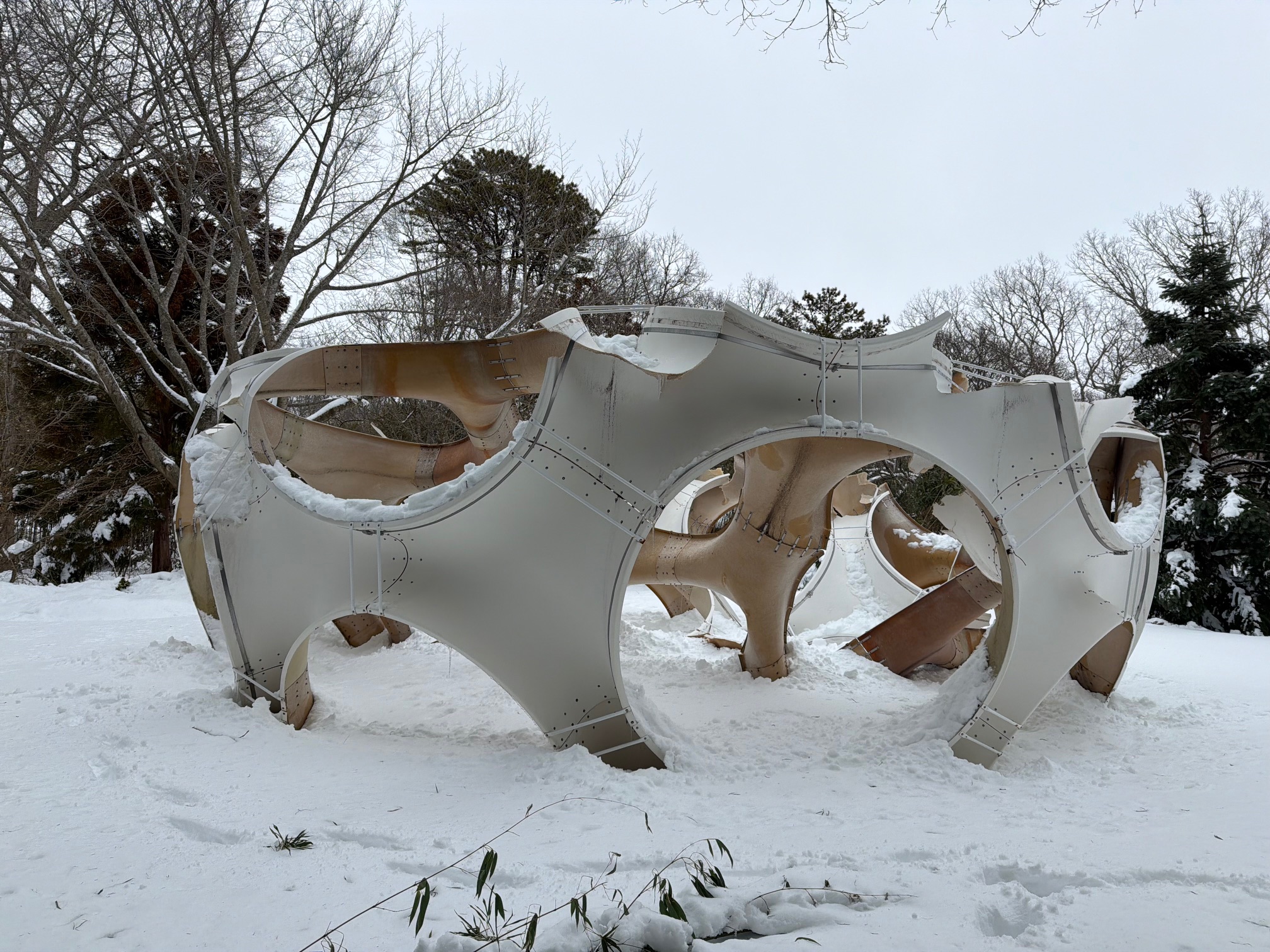
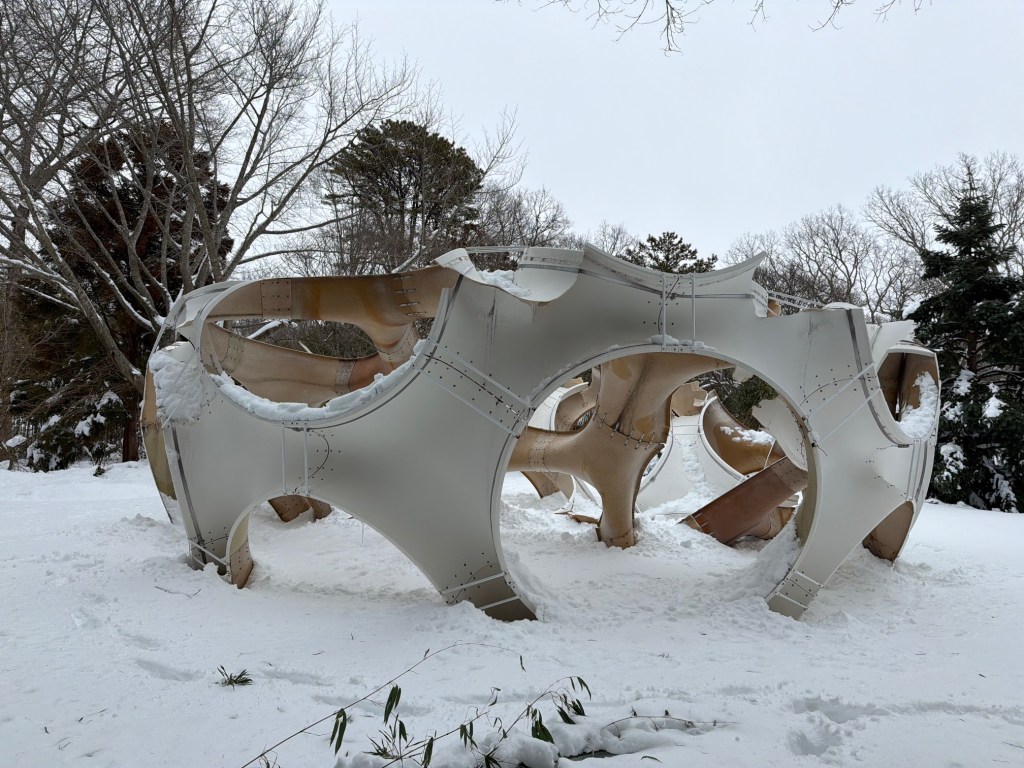
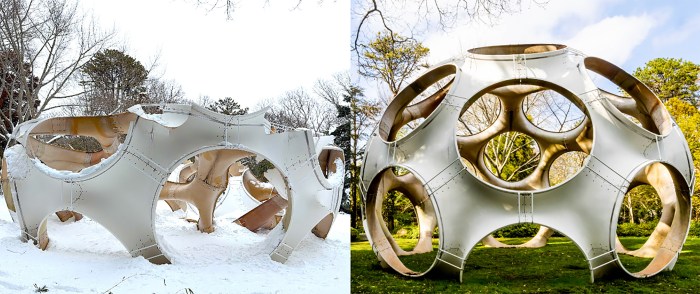
LongHouse Reserve in East Hampton announced Friday that visionary architect and futurist Buckminster Fuller’s “Fly’s Eye Dome” sculpture has collapsed due to the weight of heavy snow combined with sustained freezing temperatures.
Produced by Fuller’s student John Kuhtik, the “Fly’s Eye Dome” had been on loan at the LongHouse home and sculpture garden since 1998, and was later permanently acquired by LongHouse founder Jack Lenor Larsen in 2017. In to the announcement about the damage, LongHouse called the structure one of its “most iconic works.”
Only five examples of Buckminster Fuller’s “Fly’s Eye Dome” exist worldwide. Fuller is also responsible for designing the “Geodesic Dome” style of architecture, which can also be found in the Hamptons. In fact, famed Keeping Up with the Kardashians star Scott Disick’s parents, Bonnie and Jeffery Disick, lived in a Fuller-designed double Geodesic Dome on Sound Avenue in Baiting Hollow during the years before they died.
“We are shocked by the collapse of the “Fly’s Eye Dome,” a monument at LongHouse that epitomizes our mission to inspire living with art in all forms,” President of the LongHouse Board of Trustees Louis Bradbury said. “We are working with our insurance carrier for storm damage coverage and will launch an emergency fund to restore the dome,” he continued, adding, “Due to the continued pattern of heavy snow and cold temperatures, it will take time for LongHouse to assess the scope of this project and the extent of other damage to the property, trees, and plant life. Clearing and replacing the ‘Fly’s Eye Dome’ will be an enormous undertaking, at significant cost and requiring in-depth research. We thank our community in advance for patience and support.”
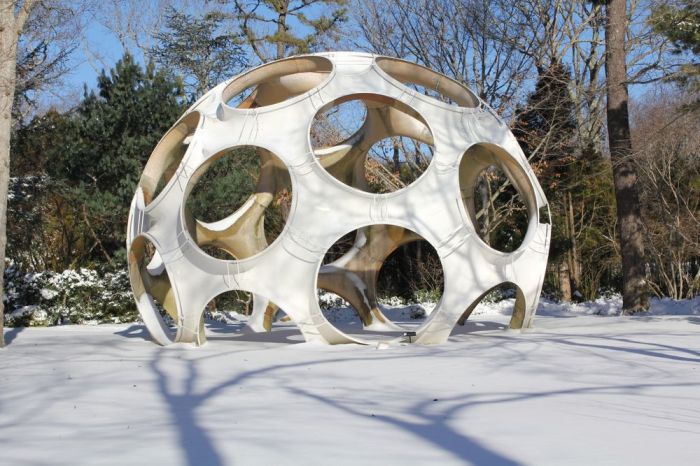
Architectural historian Alastair Gordon, who spoke at LongHouse on the structure just last summer, reflected on the structure’s significance, explaining, “Fuller’s iconic ‘Fly’s Eye Dome’ was a final utopian expression of his lifelong quest to create an autonomous dwelling machine — a ‘high-performance shelter’ for the world’s housing market. He envisioned a structure that could be cheaply mass-produced in a factory and delivered to a building site by helicopter. Adaptable to any terrain, it was designed to be fully sustainable, with its circular openings serving as ‘energy gathering devices’ — solar collectors and/or wind turbines. Fuller was not trying to copy nature so much as seek out its fundamental principles. The ‘Fly’s Eye Dome’ was his attempt to translate those principles into architecture. While it never went into mass production — only a handful of prototypes were built — it remains a powerful symbol of what the future might have been had we heeded Fuller’s warnings about ‘Spaceship Earth’ and its diminishing resources. As he famously said, ‘There is no energy crisis, only a crisis of ignorance.’”
Fuller once asked, “What can one man do, on behalf of all humanity, that could not be accomplished by great nations, great religions or private enterprise, no matter how rich or powerfully armed?” His answer was radical and practical: design and build a structure for living that could be produced at low cost, assembled even in difficult times, and make it easy to move.
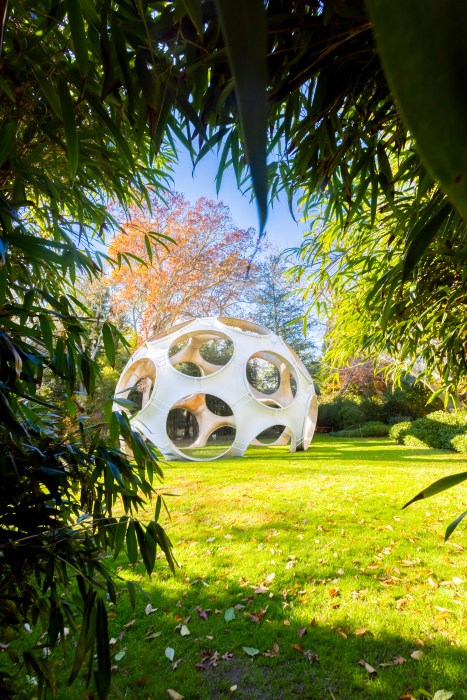
While serving as an architectural landmark at LongHouse, the “Fly’s Eye Dome” was also a gathering place for talks, concerts, sound baths, and day camp. LongHouse called it “a reminder that art, design, nature, and human imagination can converge to shape a more thoughtful future.”
LongHouse trustees and staff plan to conduct a thorough assessment of the site when the weather improved this spring. Additional updates regarding restoration efforts and the emergency fund will be announced in the coming weeks.
The reserve has asked anyone interested in helping support the “Fly’s Eye Dome” restoration, to visit longhouse.org/pages/donate.
Vetted Hamptons Resources