Learning Lovebirds: Getting Cozy with Your First Parrot

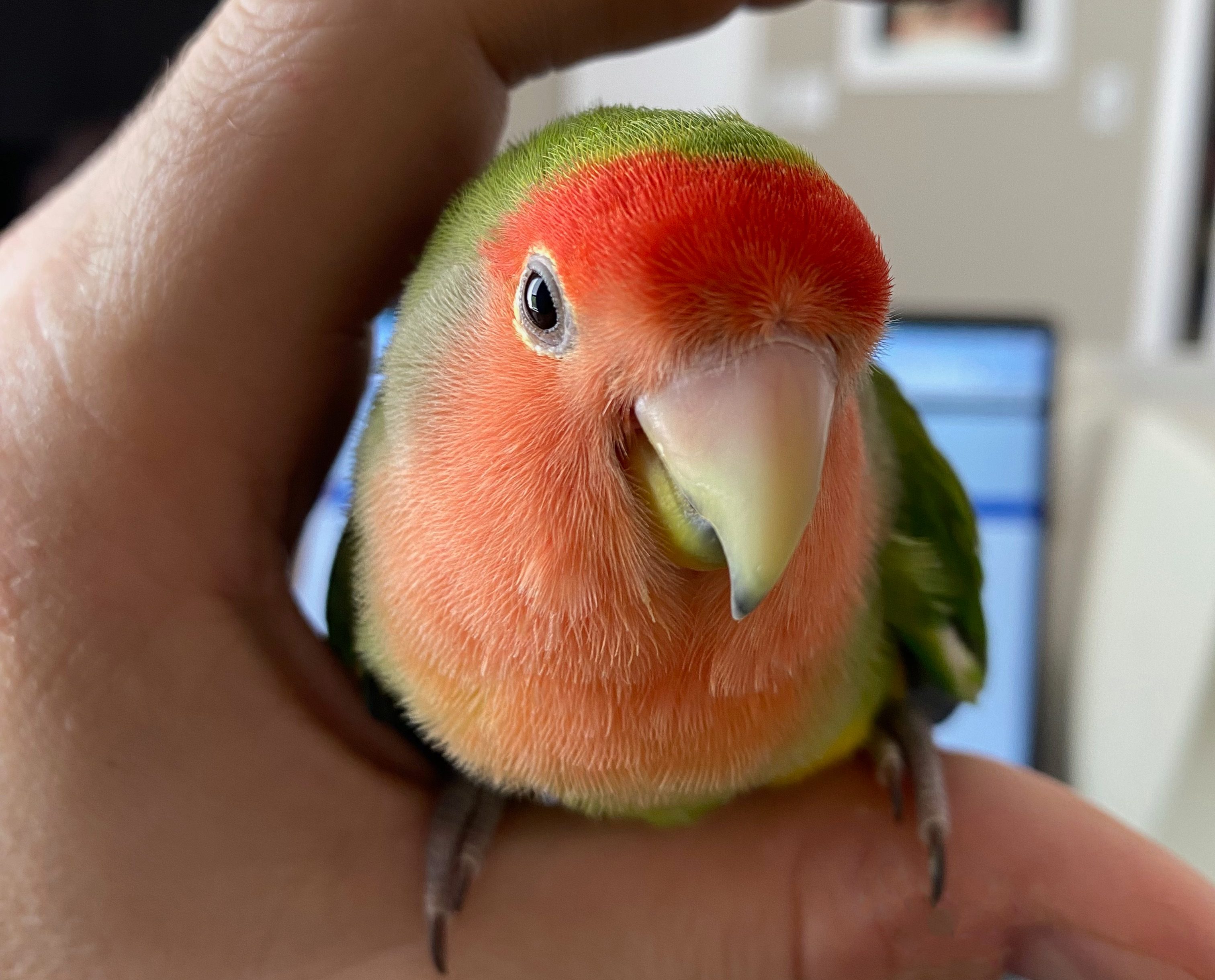
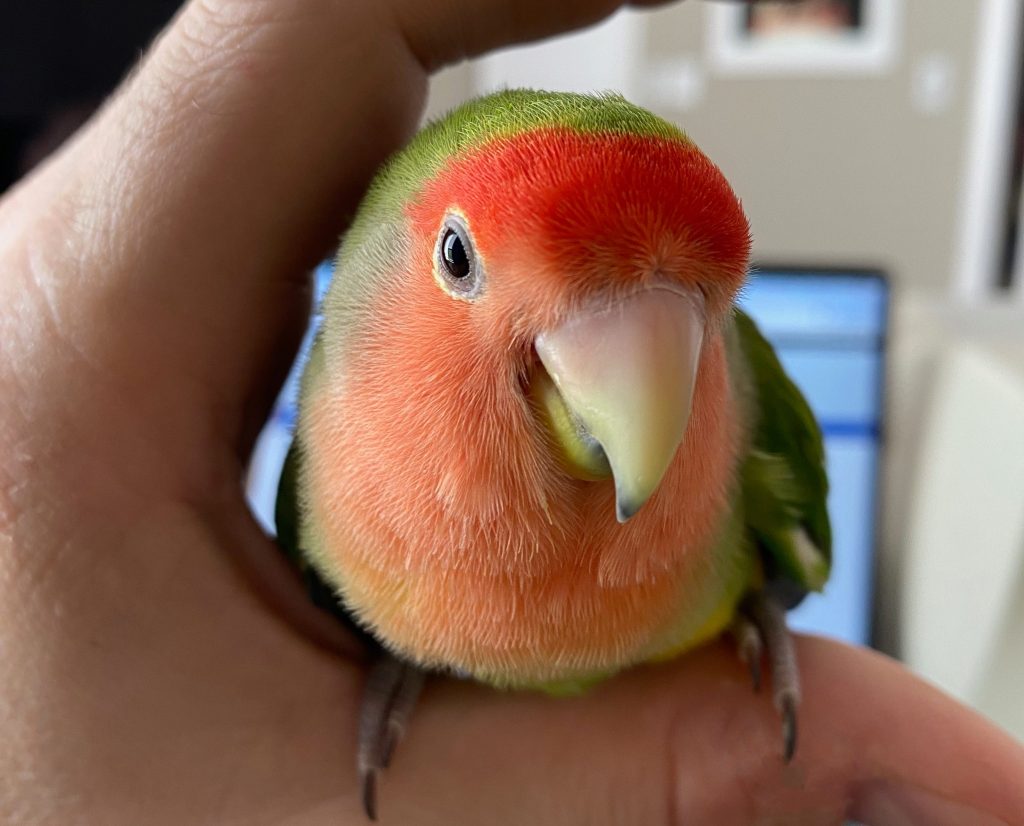
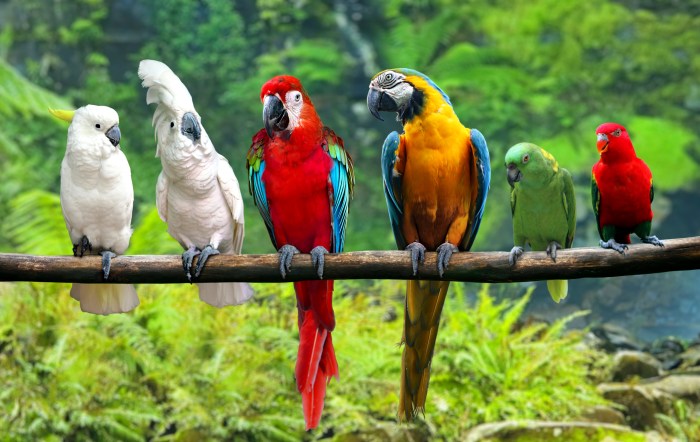
I never imagined a pet bird could capture my heart the way Bingo, our peach-faced lovebird, did. Parrot breeds — like cockatoos, cockatiels, Amazon greys, conures, macaws, budgies and, of course, lovebirds — make absolutely wonderful companions that, if you’re patient and diligent, will form strong bonds with their humans.
My wife and I declined to take Bingo numerous times from her sister’s family, who weren’t giving him quite the attention he really needed, before we were finally forced to board him temporarily to protect him from dust and cold while their home was renovated. A couple months later, we couldn’t imagine not taking him, and he joined us as a permanent member of the family.
It seemed like it could be worthwhile to share our story of befriending Bingo and building powerful trust with him while also offering some expert advice about what it takes to be an educated parrot owner who will keep your bird healthy and happy for his or her extraordinarily long life, which can be 15-25 years for a lovebird in captivity and all the way up to 40–60 years for cockatoos, Amazon grays and other larger parrots.
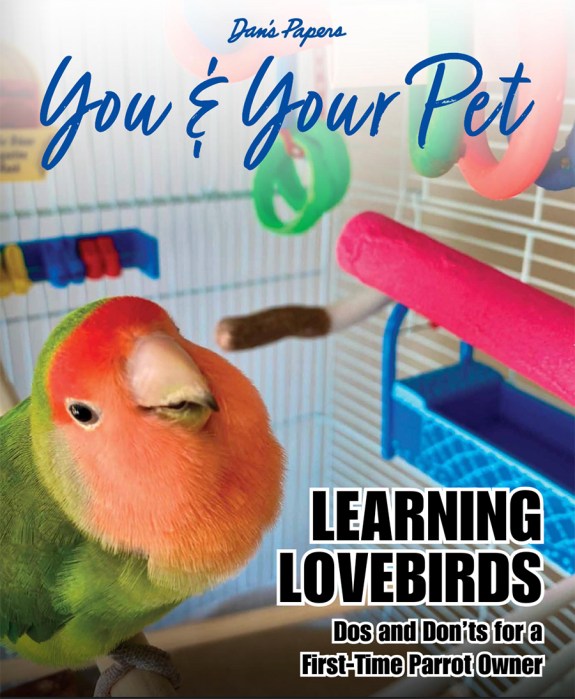
When we first got Bingo into our home, we had already spent some time with him and put him on our shoulders, hand fed him sunflower seeds and generally enjoyed his company on visits to my wife Colleen’s sister’s home, but he would occasionally get nippy with some painful bites, and he wanted absolutely nothing to do with anyone’s hands. I’ve found hand fear is one of the biggest things new lovebird owners complain about in online forums, so I’m always please to offer them the good news: Time and patience will very likely end in success.
And it should be noted, while many think lovebirds need a mate, they will actually bond better with their human if they do not have a second lovebird with which to bond.
We learned to spend as much time as possible with Bingo outside the cage, allowing him to sit on our heads, shoulders and wrists, and never forced him to do anything he didn’t feel safe doing. I’ve come to understand this is absolutely crucial, and many months later, as he sat on my wrist and I prepped his food, Bingo suddenly crawled into the palm of my hand and pushed his head between my thumb and forefinger. I didn’t grab him and let him explore freely, and within a few days we had connected on a whole new level. Bingo never feared my hands again.
Hand training is, of course, just one small part of all the things one must know to enjoy a long and fruitful relationship with your pet parrot, whether it’s a small lovebird or budgie (parakeet) or a larger cockatoo or Amazon species.
With that in mind, I spoke with Long Island Parrot Society Vice President, Past President and current Board Member Susan Chamberlain about lovebirds, parrot ownership, bird dos and don’ts, the ethical questions and more.
LI Parrot Society VP Susan Chamberlain
What can you tell me about lovebirds?
They’re just fantastic little guys. I mean, I saw them in the wild in South Africa, and they’re just so fast you can’t even get a picture of them hardly. They are in flocks. That’s where they’re all from: Southern Africa and Madagascar.
Some people say it’s unethical to own birds and support the bird industry. What do you say to them?
It’s kind of a double-edged sword. All the birds, the birds now that are sold in the United States, are all domestically bred. They’re not taken out of the wild. There was the 1992 Exotic Bird Act that forbid them from being imported into the entire country. New York was a little ahead of the game, because in 1986 they enacted a non-import law. So we are not taking the birds from the wild. But smuggling is still a big deal, not so much in this country, but in other countries.
I get the impression that people today seem to better understand you can’t just buy a bird and let’s let it sit there like a decoration. Thoughts?
One of the Long Island Parrot Society’s missions is to educate the public about proper bird care, and every year we have a Parrot Expo, and the public comes and we have an education center where people can pick up literature, ask questions. We usually have a veterinarian attend who can answer questions. And we do outreach at public libraries. … They’re usually packed, so that’s a good thing.
And I think even, like in Petco, they have little handouts that they have about bird care now, so people have to learn a little bit more, and I think that they have access to the information.
Also, the internet’s a good thing and a bad thing. They probably Google the bird. It needs certain things. So they learn a little by default, right there, but there’s a lot of misinformation. I always recommend people get info from something with .edu or .gov, or a really good attributed source, like the World Parrot Trust, the American Federation of Agriculture, something like that.
What are some key things people should know before buying a bird, whether it’s a lovebird or a bigger breed?
One of the things is, birds do not live by seed alone. They need a varied diet. People can research or ask their vet what to feed the birds, like they need some vegetable matter. There are different ways to introduce that. I find with the smaller birds — like lovebirds and budgies and cockatiels — that don’t hold food in their feet, if you clip it to cage bars, they will gnaw on it.
They will need clean water every single day. Don’t just change it. Scrub the dish.
Birds are messy. You need to develop a good relationship with your vacuum cleaner. The Roomba is often the good solution, unless you have 10 birds and they will never keep up, you need to go in there with a leaf blower.
Birds need space. They should be able to fully extend their wings, their tail should not be mashed for the long tail breeds.
Birds have stuff. They have a cage. They have outside perches. They have a carrier to go to the vet or go to be boarded when you go away. They have cage covers. They have toys, they have dishes. There are all kinds of things. You know, if you have a cat, you have a couple of dishes and a litter box and maybe a catnip mouse. But birds have a lot. They really do.
And you need to think about affording the bird. You need to be able to pay for vet care and that can add up very quickly. We’re very fortunate on Long Island to have a number of board-certified avian veterinarians, which is great. And now we have a vet school in old Brookville at LIU, and that’s definitely an advantage here on Long Island.
Don’t buy any more food than you will use in a month, because it can go bad. It can get infested with moths if you leave it open.
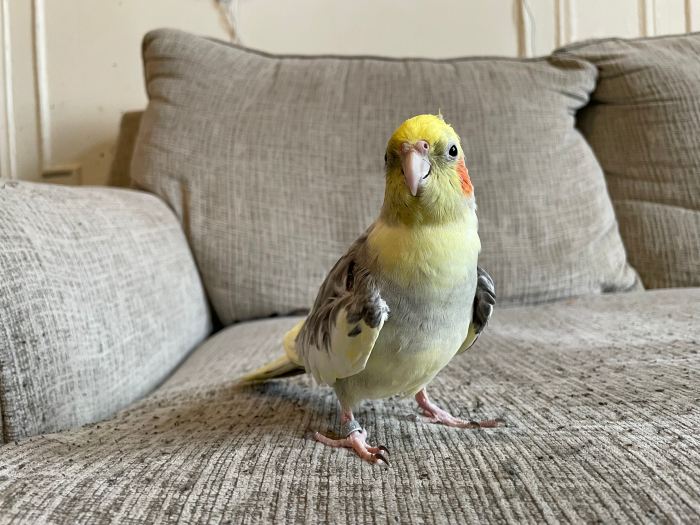
Do you think that it’s wiser for people to start out with a smaller parrot breed, like a lovebird, or is that not really necessary?
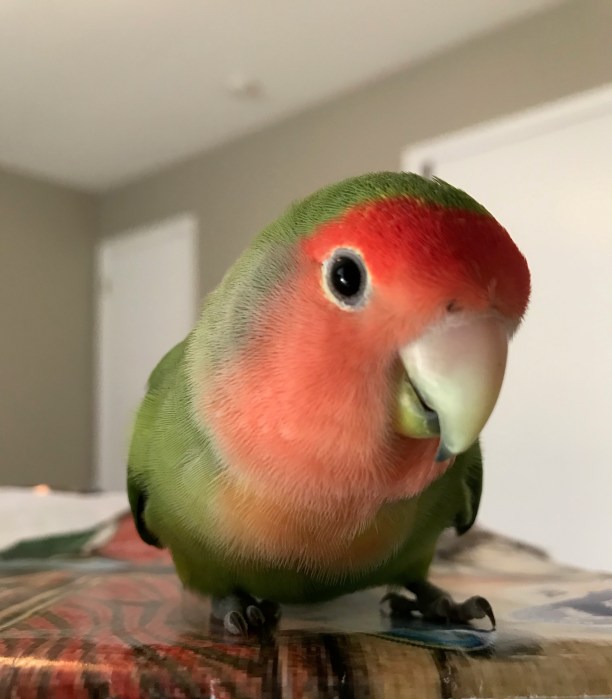
Larger birds have bigger beaks, and birds will bite, so you’re going to get bitten. A lot of times, people with their first bird get bitten, and then the bird is in the cage — it never comes out again. You need to do some training. If you’re getting a bird, a second-hand bird, you really need to learn how it steps up to get on a hand, and training a bird, teaching a bird to step up onto a stick is one of the best things you can do.
What about the idea that lovebirds need a mate?
If you want the bird to be a devoted little pet, get one love bird. They also do well in flocks. When they’re flocks, they like to gang up together in a little hut or in the cage, or even a hollowed-out coconut.
Where can people find more about the Long Island Parrot Society?
Visit us at liparrots.org or come to one of our events in-person.
Vetted Hamptons Resources