5 Overlooked Places to Explore on Long Island
 By Marc Horowitz
Many people who live in New York City and own or rent a vacation home on the East End often view central Long Island as little more than a land bridge to be traversed (or helicoptered over) as quickly as possible.
That’s a mistake.
In addition to its monumental natural beauty, the often-ignored stretch between Elmont and East Moriches has a vibrant history and plenty of stories to tell.
So, instead of jumping on the LIE or Southern State and blowing straight across the Island with a “Sag Harbor or Bust” sign in your window, check out this highly opinionated list of five of our favorite central LI day-trip destinations.
All the places suggested here are easy to get to via a quick detour off your regular route to or from the city – and they’re close enough to each other so you can hit more than one in a single day and still make it home in plenty of time for happy hour.
Start early and set your GPS for one of these great spots. You’ve got nothing to lose except your preconceived notions:
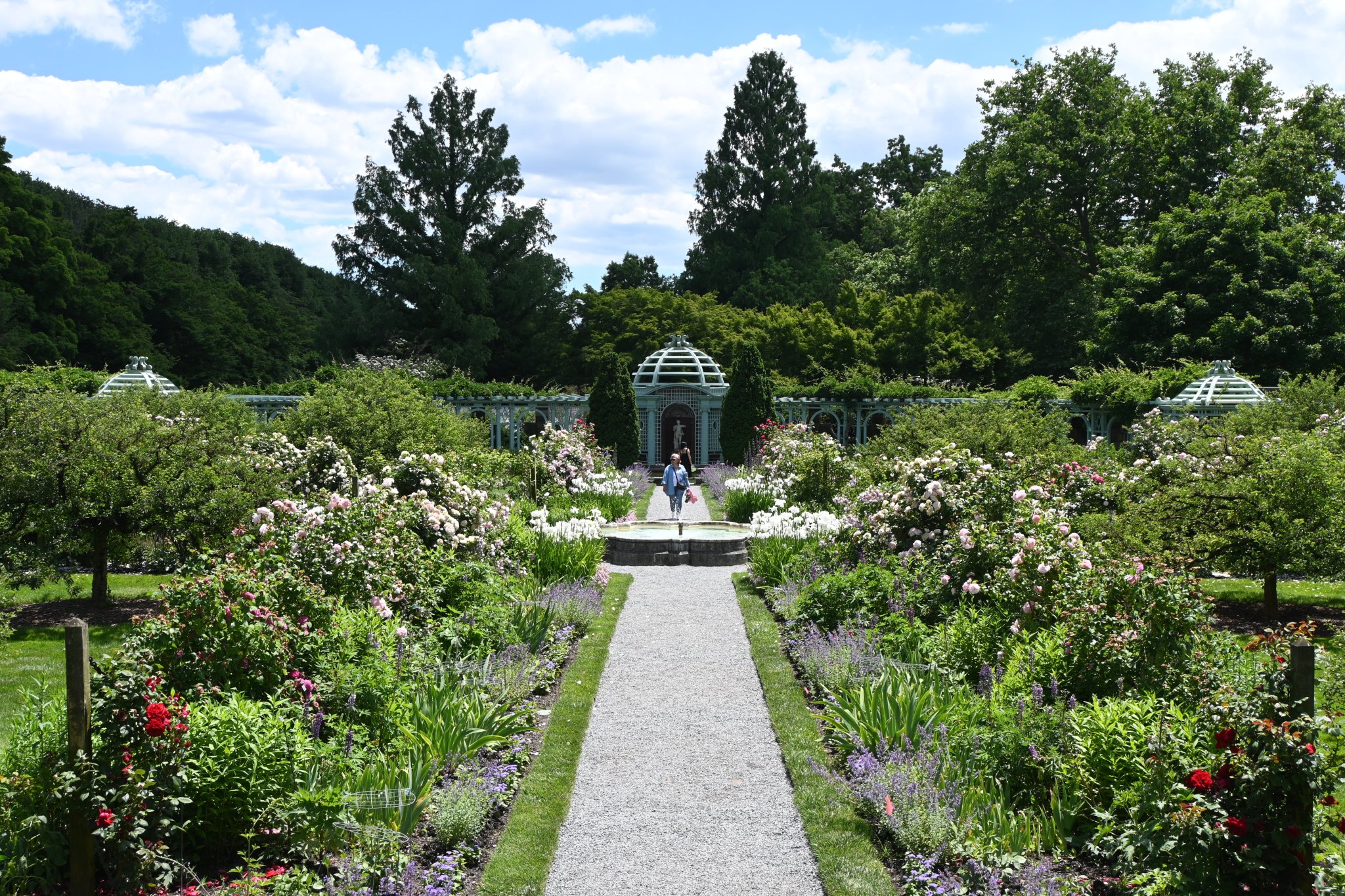
Old Westbury Gardens: Our first stop is in Nassau County, about 25 miles west of Manhattan. Set on 200 gorgeously cultivated acres and watched over by a century-old mansion, Old Westbury Gardens is a special place. Explore the lush formal gardens, woodlands, ponds, and lakes surrounding the grounds, then take a tour of Westbury House, a Charles II-style mansion built in 1906 by the renowned English designer George A. Crawley.
There are many ways to take in the stunning beauty of the house and grounds. But for an experience that resonates a little differently, try the Secrets of the Service Wing tour. On an hour-long trip back 100 years to the dawn of the Progressive Era, you’ll become a member of the house staff prepping for a party. Hit the butler’s pantry and the silver-cleaning room, then head down the creaky service staircase to the kitchen, scullery, and wine storage room as you prepare the mansion for the season’s social event.
Sagamore Hill National Historic Site: About 13 miles north and east of Old Westbury, you’ll find Sagamore Hill National Historic Site in Oyster Bay, where you’ll discover the legacy of one of history’s most popular and colorful U.S. presidents. Theodore Roosevelt lived at
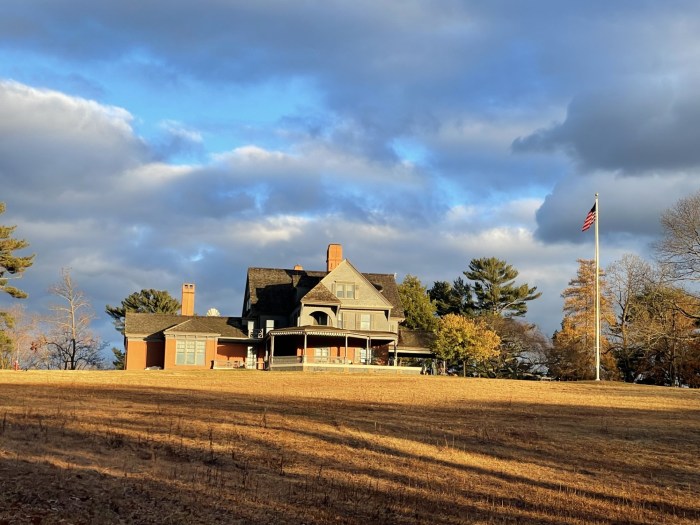
Sagamore Hill from 1885 until he died in 1919. Known as the Summer White House during his presidency, the house and grounds offer 83 acres of unspoiled natural surroundings, historic buildings, and trails to explore.
Though tasteful, stately, and historically significant, Teddy Roosevelt’s house was never intended to be a grand mansion on the scale of some of Long Island’s Gold Coast homes. As the National Park Service notes on its website, Sagamore Hill was designed to be a home for a growing family. The best way to experience it is by channeling the history of its famous former occupant and his family. Guess which balcony of the house Mrs. Roosevelt used to retreat to. The site suggests. Or “imagine President Roosevelt sitting on his porch while reading a book and quietly watching the sunset.”
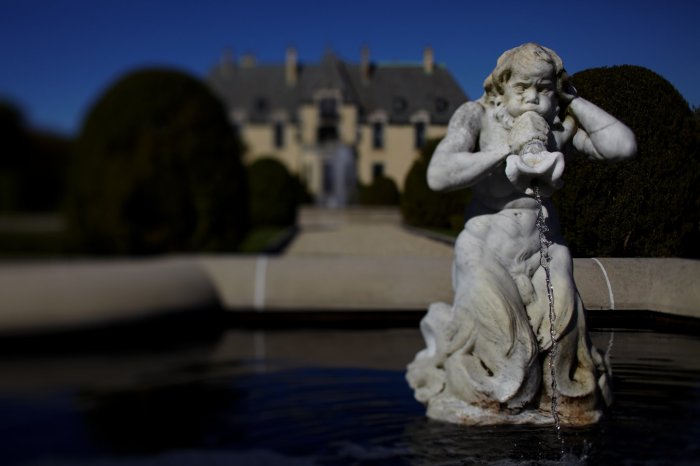
Oheka Castle Hotel and Estate: When you visit the breathtaking Oheka Castle Hotel and Estate in Huntington, it may look familiar.
Oheka stood in for Logan Roy’s Hungarian hunting lodge in the first season of HBO’s acclaimed series Succession. The Castle also appears in its pre-restored form in the opening newsreel-style footage of Orson Welles’ seminal Citizen Kane.
Suffice it to say, it’s a striking place. Oheka was commissioned by financier and philanthropist Otto Hermann Kahn in 1919 on a 443-acre plot of land in Cold Spring Harbor at an estimated cost of $11 million ($158 million in today’s money). Checking in at 109,000 square feet and featuring 127 rooms, it was then – and still is now – the second-largest private residence ever built in America.
After Khan died in 1934, the house and grounds fell into disrepair. They changed hands multiple times, being purchased 50 years later and painstakingly restored to their present-day grandeur by developer Gary Melius. Hit the Castle’s website and book a tour – or spend a night or two at the hotel if you can swing it. You definitely won’t be underwhelmed.
Walt Whitman Birthplace Museum: As its name implies, the Walt Whitman Birthplace Museum in Huntington Station was the first home of one of the most important American poets in history.
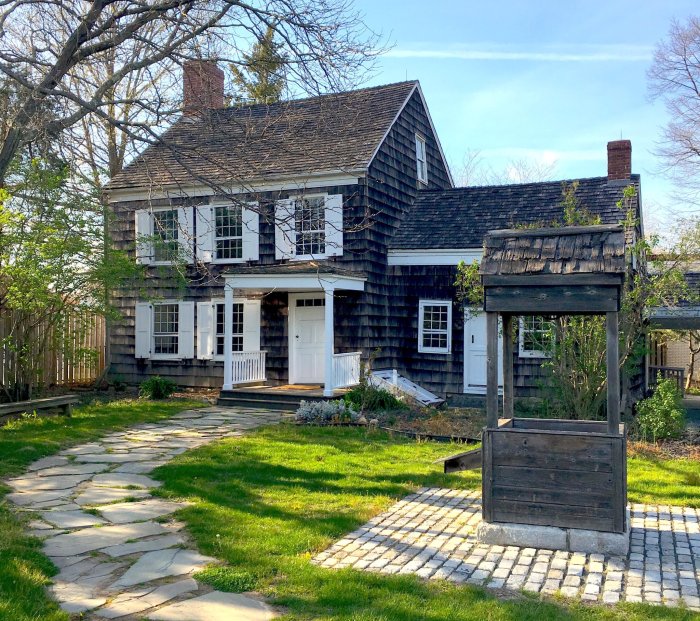
Born in 1819, Whitman only lived in the simple Federal-style home for the first four years of his life. His family moved to Brooklyn in 1823, but the poet’s birthplace has been lovingly restored and preserved. It functions today as a cultural touchstone and study center for Whitman’s legacy.
In addition to touring the house and grounds, the best way to get your Walt on is by spending a little time in the Interpretive Center, where you’ll find many portraits (the museum notes that Whitman was one of the most photographed poets of all time). You can also explore a treasure trove of original letters, manuscripts, and other artifacts. There’s even a recording of the poet’s voice captured in 1890 by Thomas Edison himself.
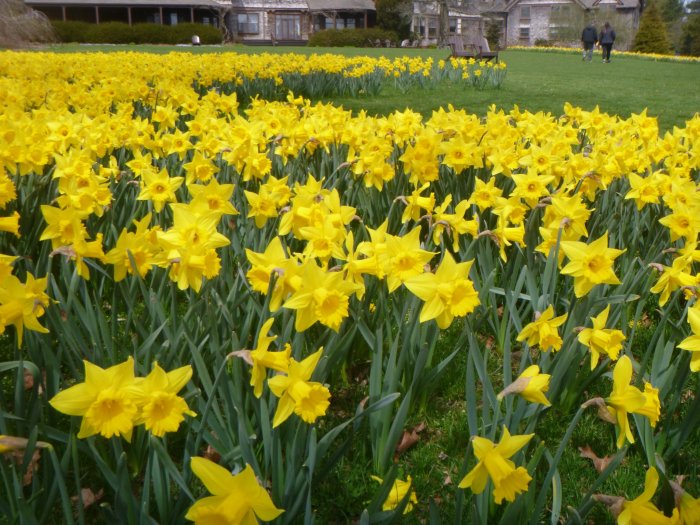
Bayard Cutting Arboretum: Our last stop on this journey is the first stop on Long Island’s beautiful South Shore, the hamlet of Great River. Designed in part by revered landscape architect Frederick Law Olmsted, who also designed Central Park and Prospect Park, the Bayard Cutting Arboretum is an excellent place to find some serenity and perspective.
There are lots of ways to explore the Arboretum, but don’t miss the River Walk, a gorgeous scenic path that winds along the banks of the Connetquot River. In the spring, the Royce Rhododendron Garden explodes with colors. In the summertime, the Dahlia Garden does the same.
Make sure to stroll through Oak Park, an Olmsted-designed landscape modeled after the rolling hills and mature oaks of Victorian-era English parks. The area features more than 30 different species of oak, including some of the oldest trees in the Arboretum.
Vetted Hamptons Resources