Bridgehampton Militia: Local Farmers Help Beat Back the Redcoats
 By Dan Rattiner
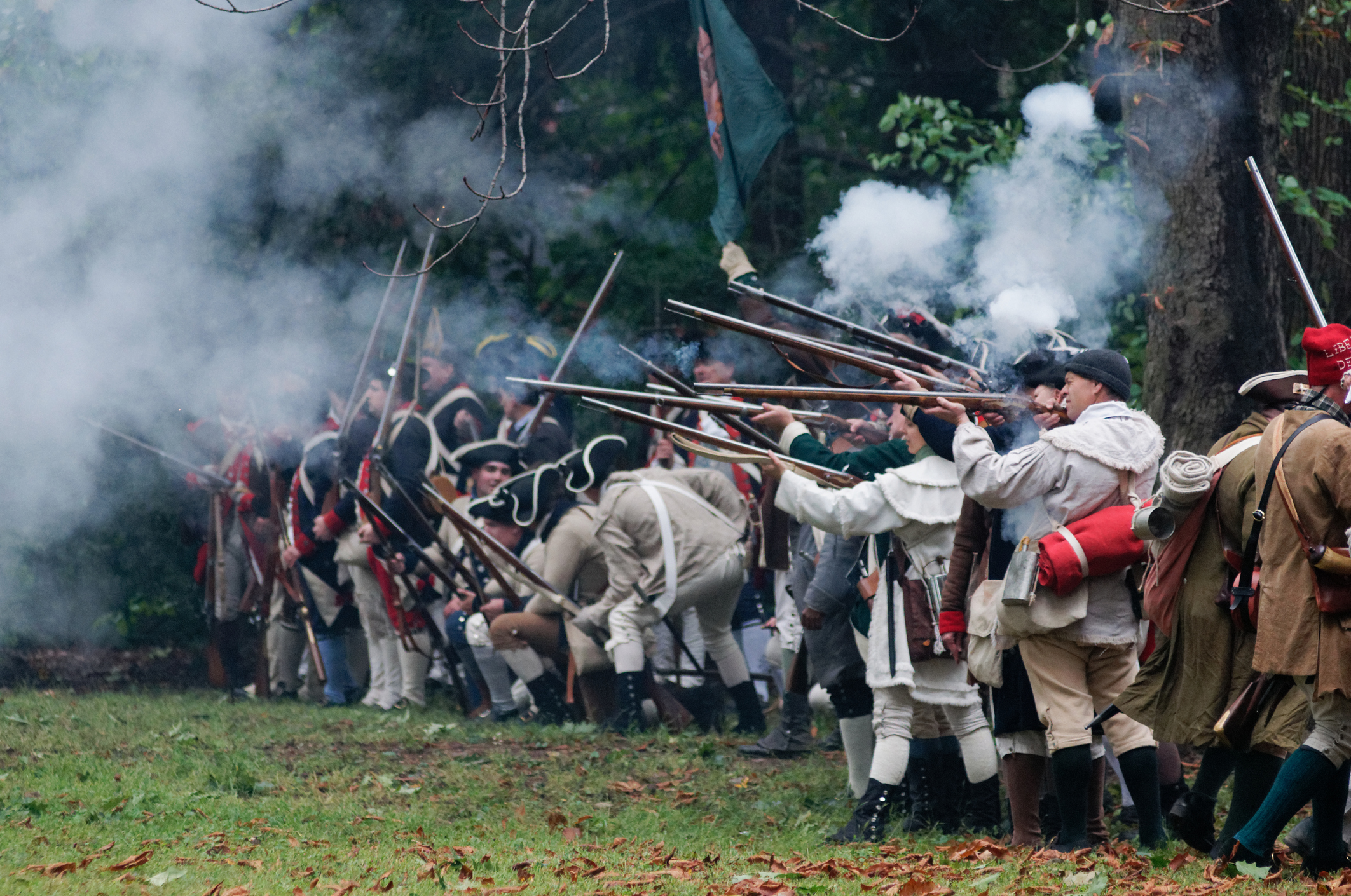
In recent days, the military have been present on street corners in our communities. And it makes me think of the last time military men were out and about in the Hamptons.
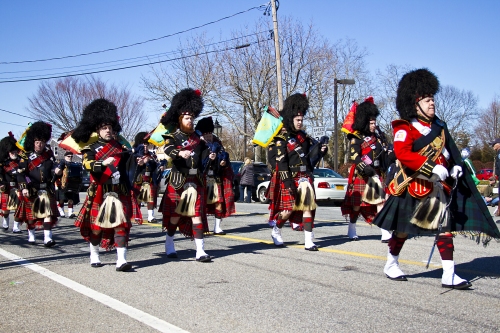
And yes, they were protesting a king. King George III. It was 1775 and these soldiers between 18 and 45, farmers, cattlemen, blacksmiths and wheelwrights, were answering the call to arms. They mustered, drilled and maneuvered three days a week on the Bridgehampton Green to get ready for war. They fired muskets, stabbed bayonets into hay bales, a motley lot, perhaps 400 in all, in uniforms, but all different uniforms one from another. They wore whatever they could scare up. Men from Southampton, East Hampton, Sag Harbor and Southold, the Bridgehampton militia. Gunshots at these events echoed throughout the community.
It’s been well documented what this militia did during the revolution. On Aug. 1, 1776, three weeks after the Declaration of Independence was adopted, the orders came down from Gen. George Washington at his headquarters in Boston just after the British army, bottled up in that port for a while, was sailing away toward New York City.
“The British have had enough of us up here,” the orders said. “Instead, they want Manhattan. We have to stop them. I’m coming. You come too. More orders will follow.”
Washington, having arrived in Manhattan, looked through a telescope and could see the British redcoats disembarking from the Men O’ War onto Staten Island. It seemed there might be 25,000 of them. They would be crossing the channel and coming ashore in Brooklyn, his spies told him. They’d march north along the Brooklyn shore of the East River, then spill into Manhattan. What would Washington do? His militias were arriving from Vermont, New Jersey, Long Island and Upstate New York. He wouldn’t engage the British on the Brooklyn beaches. Instead, he’d array his militias in a long line, 25 miles in length from the East River to Jamaica Pass. Eventually 16,000 rebels in all. The British shall not pass. They shall not get into Manhattan. Instead, he would drive them back south across the Narrows to Staten Island, from whence they had come.
As for the farmers from the East End, just 400 of them, he put them at the most easterly end of the west-to-east line he was building. They should build fences. Guard the livestock. Don’t let the British in to steal any cattle.
Night fell. And in the dark, the British, as expected, crossed the Narrows in small boats. Not 20,000 of them. 32,000 of them. And the supposed drive north along the shore of the river never happened. It had been a ruse. Instead, the British sent a small contingent of redcoats up along the East River to keep the colonists interested. But the main thrust, a huge effort in the dark, came up on Washington’s eastern flank, guarded not by the heavily armed colonial militias, but by 400 farmers with muskets standing in pastures defending the cattle. When the militiamen saw the tens of thousands of redcoats coming at them, they pulled back, which opened a gap between themselves and the other militias so the redcoats then poured through. Then came Part Two of their plan. In the dark, the redcoats pivoted to the left, and then headed toward the East River behind the militias. The militias, now surrounded, would be rounded up in a stunning defeat.
Washington now realized that only a miracle could save them. And they got one. At 4 a.m., the weather turned, dropping a great fog over the battlefield. In the dark and in that fog, Washington ordered everyone, except the East Enders, to retreat toward the river and up to the north before the British could close the trap on them. And they succeeded. Practically the entire American army, defeated but unbowed, was able to struggle aboard a huge fleet of small boats which took them quickly in the dark across the East River to safety in upper Manhattan.
As for the Bridgehampton militia, seeing that the British army was now between them and the river, headed off the other way, toward Montauk, to get clear of everything. And soon thereafter, in the confusion, they were evacuated to Connecticut by boat to fight another day while the redcoats got the spoils, which was all of Long Island, for the next five years. It took all those years for the British, now further south at Yorktown, to raise the white flag and accept that the United States of America had won its independence.
There was one other encounter the Bridgehampton militia is known to have had during that war. In the autumn of 1775, as Washington was trying to dislodge the British at Boston, the Green Mountain Boys, a militia from Vermont, attacked a British garrison in upstate New York known as Fort Ticonderoga. The Bridgehampton militia had been ordered up the Hudson to be part of that. But the fort fell so fast — only about 90 redcoats were there, and all surrendered without a fight — the East Enders got there only after it was over.
As a result, their orders were changed. The 400 militiamen from Bridgehampton were to escort the 90 redcoats down the Hudson River to parade them in the streets of Philadelphia while the Second Continental Congress was in session. And that they did, flags flying.
In 1934, one of those flags, or what was believed to have been one of them, was found in the attic of a home in Hampton Bays. It is in the Riverhead Museum today, an American flag, but not quite accurate. A treasure from that wonderful earlier day.
The full mustering grounds for the Bridgehampton militia no longer exist. But a small part of it, about half an acre, remains. It is just behind the Almond Restaurant on the southwest corner of the intersection of Ocean Road, Lumber Lane and the Montauk Highway. Feel free to walk into that half acre today and sit on one of the benches. It is called Militia Park. And you can imagine all I’ve told you about our militia.
Vetted Hamptons Resources