Upper West Side's Columbus, Verdi & Dante Statues: An Homage to a Nation of Immigrants
 By Christopher Verga
New York City in the 1880s was undergoing rapid change. The Gilded Age was in full swing; elevated railroad lines spanned Manhattan Island, the city was building its first skyscraper (the Tower Building), and the first wave of 300,000 Italians had migrated to the United States. (Italian migration would grow to four million by 1920).
At the close of the 1880s, four out of five construction workers in the city were Italian, which fueled the building boom in New York City for the next 40 years. However, this large influx of newcomers did not have a warm reception from most New Yorkers, who viewed them as unfamiliar and unlikely to assimilate into society.
The Italians struggled to learn English and had customs foreign to many New Yorkers. However, it was overlooked that New Yorkers already knew Italian culture, and Carlo Barsotti would remind them.
His crusade would spark a building spree of statues that provided Italian representation in the city, despite the large population that refused to accept the new arrivals.
Barsotti and his family came to the United States in 1872 and settled in New York City. Witnessing firsthand the mass migration of fellow Italians, he started the II Progresso Italo-Americano newspaper at the age of 19.
The demand for his Italian language paper quickly made it the city’s most circulated publication, which catapulted him into the role of a lead advocate for his community.
The most dominant issue newly arrived Italians faced was how locals weaponized values of what defined a true American and whether Italians could ever be considered as such. In rebuttal, Barsotti addressed these biases through editorials and organized efforts to ensure that Italian contributions were represented throughout the city.
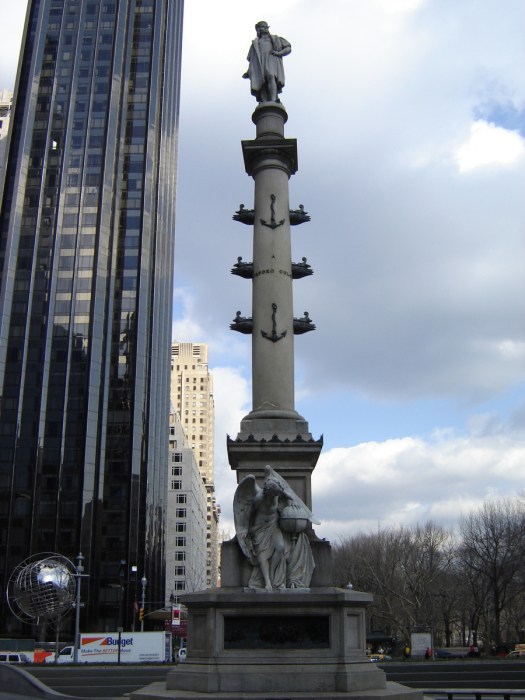
The first of his three statues on the Upper West Side would be the Columbus statue on 59th Street and Fifth Avenue (now known as Columbus Circle). Forming the Italian Committee on the Columbus Monument/Italian Club, people could purchase a minimum $10 membership to raise $20,000 for the renowned sculptor Gaetano Russo to create an extravagant monument.
Using the success of this crowdfunding method, Barsotti financed the additional statues. The original bronze design featured Columbus pointing to the North American continent on a globe, with his back towards Central Park and facing the expanding development of the Upper West Side.
The statue was completed and formally dedicated on October 12, 1892, commemorating the 400th anniversary of Columbus’s landing in North America. The statue’s modifications included Columbus overlooking the city from atop a 75-foot column that cuts through his three ships—Niña, Pinta, and Santa Maria. The pedestal has an additional winged statue with a globe.
Barsotti’s next target for statue installations on the Upper West Side would be related to the arts. Composer Giuseppe Verdi defined the Romantic style of opera through his most famous works, Rigoletto, Otello, La Traviata, and Don Carlos. In 1901, Verdi’s death brought all his art back into the mainstream. Barsotti used this public attention to expand Italian representation in the arts by constructing a monument to him on Broadway and 72nd Street.
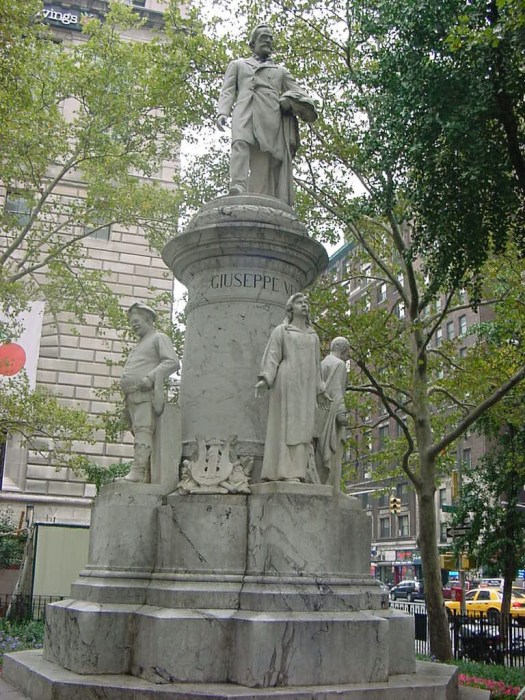
Sculpted by Pasquale Civiletti, the finished statue depicted Verdi standing on a cylindrical pedestal with four characters from his most renowned operas: Aida, Otello, Leonora, and Falstaff. The revealing of the statue on October 12, 1906, drew over 10,000 onlookers as a band played Verdi’s well-known music, which was later drowned out by a children’s choir singing “My country ’tis of thee.”
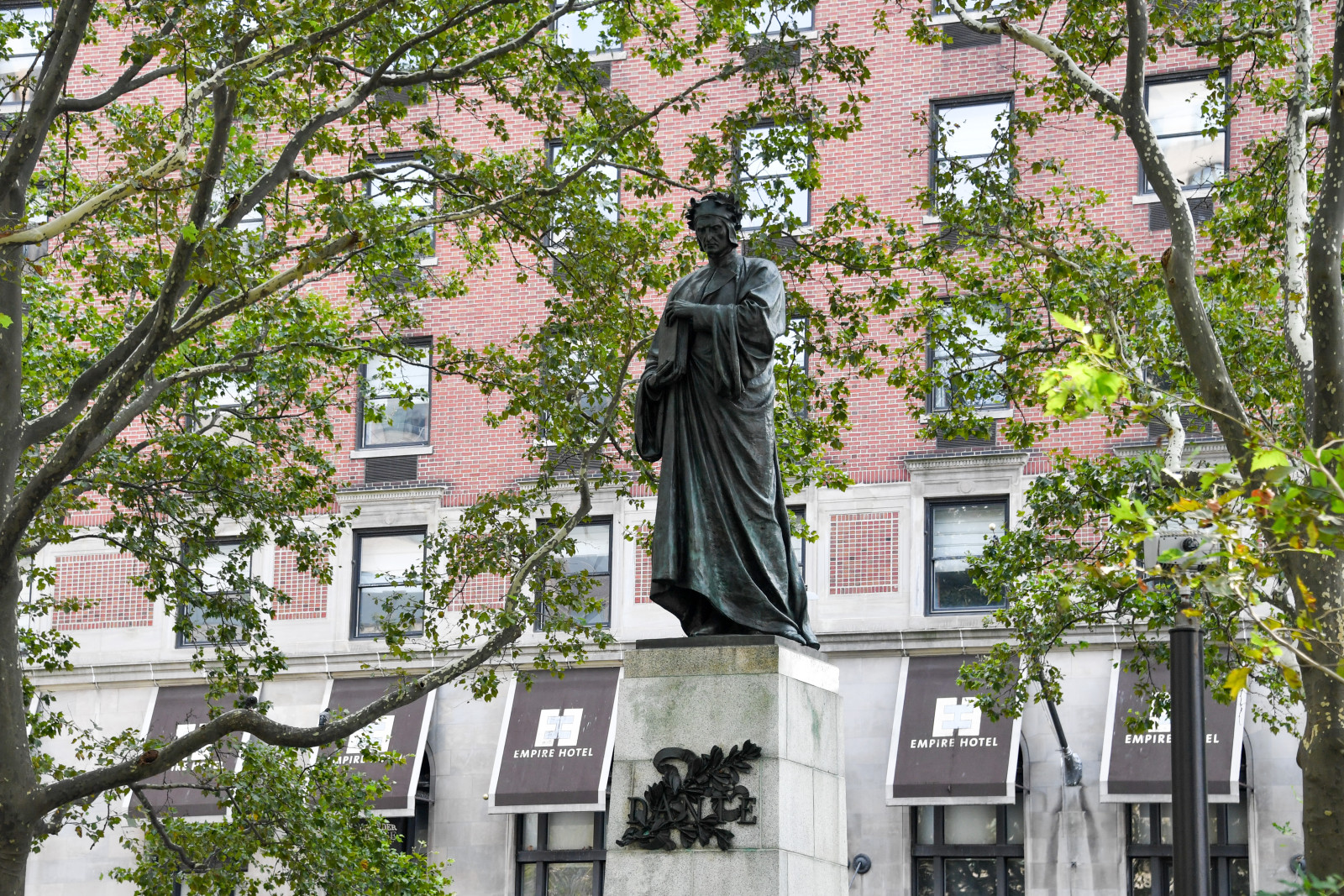
The third of his statues in the Upper West Side was of Dante Alighieri, a writer and poet during the Middle Ages, whose most famous work was The Divine Comedy. The original placement of the statue was in the bustling Times Square. City planners initially rejected him because “a monument to grace the square should be an American of the Americans.”
Pushing back, Barsotti argued that a “great literary man should be in the atmosphere of the New York Times building.” The dispute about where to locate the statue would delay its completion until 1921, when the city compromised to have Ettore Ximenes’s statue of Dante erected on Broadway and 63rd Street as an alternative (across from Lincoln Center).
After their construction, all three statues became the subject of negative editorials calling them “obstructions and not art” or demanding their removal due to quality-of-life concerns, but they outlasted their critics.
Upon Barsotti’s death in 1927, he had obtained positive Italian representation throughout the city. Today, the representation of these monuments is more significant than that of a single ethnic group; they stand as a testament to the fight against anti-immigration sentiment and the beauty that can come from resistance.
In recent weeks Barsotti works have been brought to the public eye once more when Mayor Eric Adams has moved to declare two Columbus statues in New York City public landmarks in October – with the Columbus Circle work being one of them. It became a sticking point late in the arc of an already heated mayoral election with many twists and turns. The dialogue continues.
Vetted Hamptons Resources