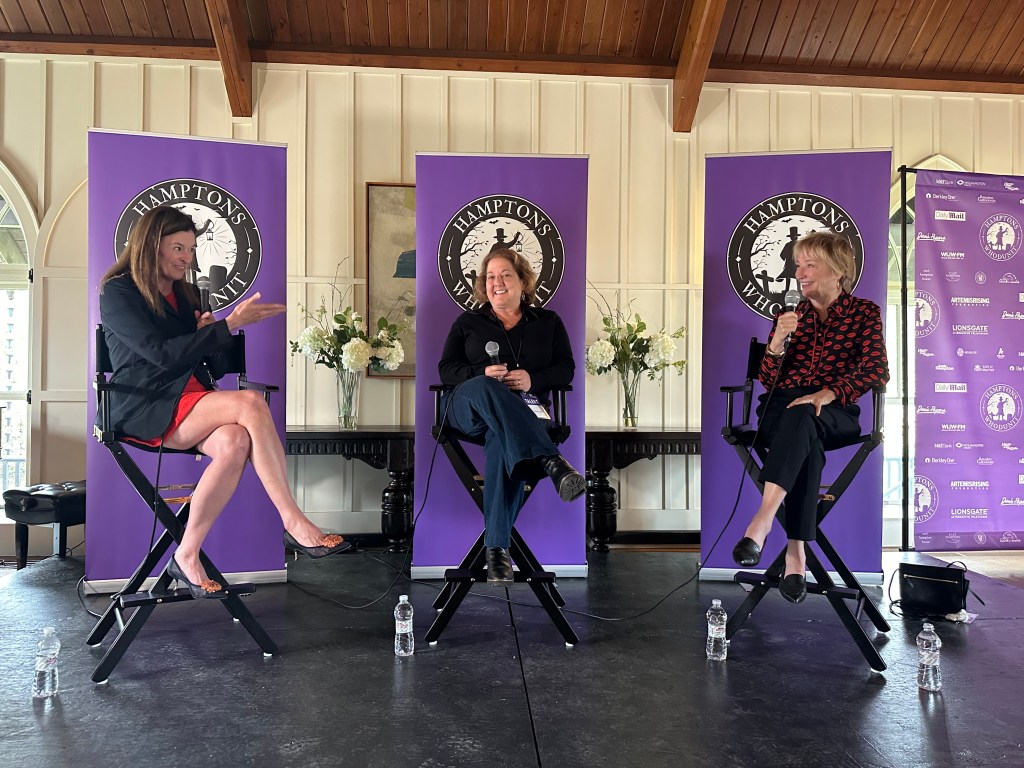
Blood on the Page: Murder Takes Center Stage at 2026 Hamptons Whodunit

For the fourth year in a row, on a macabre-tinged April weekend in East Hampton Village, a bevy of best-selling mystery, suspense and true-crime writers got together with some of their most avid readers to talk about evil deeds and the darkness of the human soul.
Though it’s only been around since 2023, the Hamptons Whodunit has evolved into a premier East End social and literary event, attracting many of the biggest names in the genre.
While they tend to root for the good guys to catch the bad guys, people who love to read about murder and mayhem are always drawn to the perpetrators. They’re fascinated by the perps’ motivations, their backstories and their inner lives.
What exactly glitched inside that dude’s head, they wonder, to make him bury his axe between the shoulder blades of the local sheriff? How did growing up in a dysfunctional family ultimately lead that seemingly well adjusted young woman to set the fatal office fire that immolated two of her coworkers?
The festival’s organizers think they know the answer.
“Why are we so interested in mysteries and crime?” they ask in their program notes. “The answer is simple: We are problem solvers. We are analysts and puzzlers. We are rule followers who believe in justice. We are curious to understand the motivations that draw people to the dark side of human nature.”
In addition to attending a packed slate of author seminars with titles like Vigilantes, Vengeance, and the Price of Justice, problem-solvers and Whodunit goers also fanned out across East Hampton Village for a myriad of special crime-related events.
For example, attendees were invited to take a graveyard tour which doled out all kinds of nuggets about the Village’s history (including a scandalous witch trial). There was also a trivia night and murder mystery game attended by some of the featured authors, and a mock crime scene challenge where small groups got a chance to hone their forensic skills while solving a whodunit of their own.
And since the festival draws not only true crime fans, but also aspiring writers, the pièce de résistance this year was the launch of the inaugural Whodunit PitchFest.
Festival attendees were given the chance to present “original documentary and unscripted series ideas rooted in real-world crime, injustice and unanswered questions.” At least one selected project was slated to receive up to $10,000 in development funding. (At our press time, the winner of this year’s inaugural award hadn’t yet been announced.)
Seminar Highlights
Heavy hitters in the field – authors who have sold many millions of books – took part in some exceptionally lively and entertaining seminars.
In Familiar Faces, Fatal Crimes: Murder in a Small Town, moderator Abby Dunn, the festival’s fiction and marketing director, spoke with bestselling authors L.J. Ross and May Cobb. Both women have written books set in the relatively isolated and insular towns where they grew up – Ross in Northern England and Cobb in East Texas.
Like many of her books, Cobb’s All the Little Houses (2026) takes place in her hometown of Longview, TX – in this case during the 1980’s. Without delving into spoilers, suffice it to say that the reader meets mean girls and social climbers on the way to a dark revelation or two.
Though on its face it doesn’t have a lot of similarities to the classic Laura Ingalls Wilder books and TV show, Cobb calls her latest novel “my twisted wink and nod to the Little House on the Prairie series.”
“The mom is a trad wife and the dad is a hot woodworker,” she quipped. “What could go wrong?”
Though written over a decade ago and set in her hometown of Northumberland, Ross’s first book, Holy Island, was only recently released in the United States. It features the first appearance of Detective Chief Inspector Ryan, a beloved Ross character who travels to the island looking for a measure of serenity, but instead finds ritualistic murder.
“It’s very, very scenic. It’s got castles, mountains, beautiful coastlines,” Ross says of her English hometown. “It’s got thousands of years of history and this ruined priory, so the setting is perfect… You have a ready-made pot of suspects and it’s all about small-town secrets and lies.”
In Character vs.Conspiracy: Personal Stakes in High-Pressure Plots, moderator Alex Finlay and bestselling authors Greg Hurwitz and David Ellis did their best to address the rather cryptic seminar title.
Finlay, himself a bestselling author, asked Ellis about the notion that Ellis’s characters – including the so-called good guys – tend to be morally ambiguous. Ellis’s answer spoke to the central themes of the mystery and suspense genre as a whole, and the relationship between writer and reader.
“I think we’re all morally ambiguous, and maybe we don’t like to think that about ourselves,” Ellis said. “I want you inside my characters’ heads – and if they’ve got some dark thoughts, I want you to experience the darkness even if they’re not acting on it. People will say my characters are really dark. And I ask, ‘are they really so different from the rest of us?’”
Greg Hurwitz took the audience through the evolution of Evan Smoak, (aka Orphan X), his most famous character and the protagonist of 11 novels to date.
Trained as a government assassin with a complicated backstory, Orphan X ultimately tries to leave his past life behind and use his training and expertise as a force for good.
Hurwitz explained why the character continues to grow and evolve – and why he continues to connect with readers.
“Orphan X’s handler, a former CIA station agent, says to him at 12 years old, ‘the hard part isn’t making you a killer. The hard part is gonna be keeping you human,’” Hurwitz observed. “I thought, ‘I can write a thriller series that’s about him becoming more and more human throughout the course of the series’… He was taught all sorts of things, but he never learned how to speak the language of intimacy… so ‘there’s a lot of room there [for character development].”
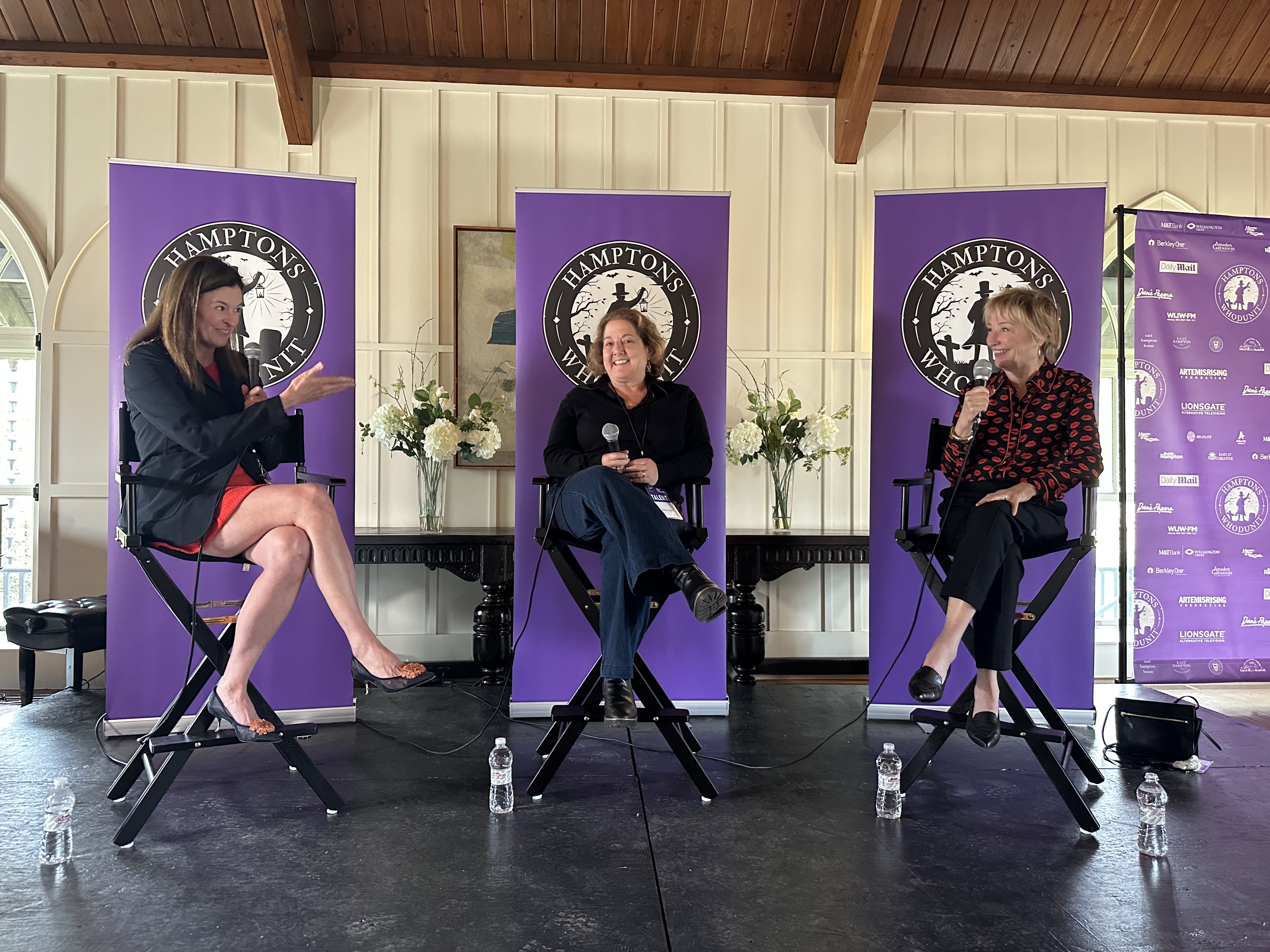
One of the most entertaining seminars of the weekend was From Magazines to Mysteries: Editors on Their Life of Crime, which featured Carrie Doyle, the fest’s co-founder, CEO and president, in conversation with Karen Dukess and Kate White.
All three women became full-time authors later in their professional lives after successful stints in the magazine publishing world.
Before she was a novelist, Karen Dukess was a news reporter in Florida, a speechwriter on gender equality for the United Nations, and… wait for it… the publisher of the Russian edition of Playboy.
Carrie Doyle also has a Russia connection, having been an editor-in-chief of the Russian edition of Marie Claire.
From a magazine editor’s perspective, Kate White was the heaviest hitter among the panelists, having spent 14 years as the editor-in-chief of Cosmopolitan before leaving over a decade ago to concentrate on writing suspense fiction full time.
This particular seminar was less about mystery and suspense writing and more about the halcyon days of magazine publishing, both in the United States and abroad. In essence it was three incredibly accomplished women trading nostalgic stories about a bygone era.
White had young children during her stint at Cosmo, and she talked about exposing her kids to the often-racy cover lines that were the magazine’s calling card.
“I had to tell them, ‘mommy doesn’t write those cover lines,’” she said. “The magazine is sent to another place and the cover lines are written there.”
When Doyle asked her if that was true, White admitted it wasn’t.
“No, I’m the woman responsible for ‘Mattress Moves So Hot, His Thighs Will Blow Up’ and ‘What To Do With an Iffy Stiffy’” she admitted.
Vetted Hamptons Resources