
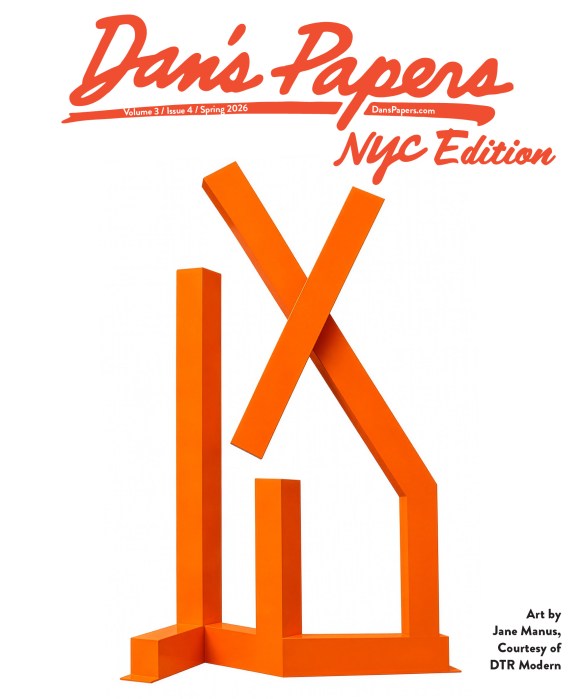
Meet Dan's NYC Cover Artist: Jane Manus
 PARTNER CONTENT
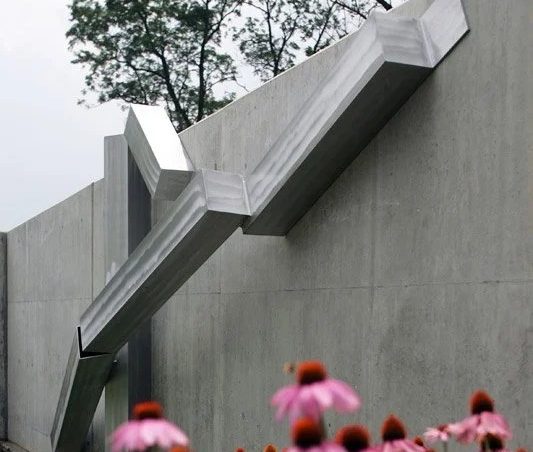
There is something deeply commanding about sculpture that understands space not as background, but as collaborator — and Jane Manus has built an entire language around that idea.
To understand the force of her work, it is worth situating it within a longer lineage. The 20th century marked a decisive shift in sculpture, as artists moved away from representation and toward structure, material, and spatial awareness. Russian Constructivists redefined the medium as something built rather than depicted, privileging geometry and industrial clarity. Later, American Minimalism refined that approach, emphasizing reduction, presence, and the relationship between object and environment. Artists such as Mark di Suvero and Joel Shapiro introduced a new sense of dynamism, exploring imbalance, motion, and the tension between weight and suspension.

Manus enters this lineage with intention, though never as a derivative voice.
Her early formation already reveals a commitment to material intelligence. A Florida native, she studied at Rollins College before continuing at the Art Institute of Boston, where sculpture became central to her practice under the guidance of Michael Phillips. Early works were raw and direct, bolted constructions that embraced the inherent qualities of steel. When wood began to warp, she adapted, learning to weld and developing a process that has remained fundamental ever since. That relationship to making—responsive, tactile, grounded—continues to inform the work even as it evolves into something more refined.
The influence of Constructivism is present, though what she develops feels distinctly her own.
Her forms are geometric, yet never static. Planes intersect with precision, though the compositions resist stillness, shifting perceptually as one moves around them. There is a sustained tension within the work, a balance that feels exact while remaining open, allowing the sculpture to exist in a constant state of visual negotiation.
Her transition to aluminum in the early 1980s marks a significant evolution. The material offers greater flexibility, lower structural weight, and a surface that holds color with clarity. With that shift, the work becomes more resolved in its finish while maintaining its conceptual rigor. Surfaces engage with light in ways that alter perception, and negative space assumes an increasingly active role, shaping the experience as much as the physical form itself.
The sculptures require movement.
One does not remain fixed in front of them; one navigates them. Angles open and close, edges align and separate, and the composition reveals itself incrementally. This sensibility aligns closely with her philosophy of public art, which centers on the idea that art should exist within the flow of daily life rather than remain confined to designated spaces. Her large-scale works, often installed in open environments, invite interaction through proximity and passage, allowing viewers to encounter them as part of their lived surroundings.
That approach translates seamlessly into the gallery.
At DTR Modern Galleries, the sculptures hold a strong presence without excess. The forms are precise, though not rigid, and the interaction between line, plane, and void creates a visual rhythm that unfolds gradually. Light shifts across the surfaces, altering perception with subtlety, while the compositions maintain a clarity that feels both disciplined and expansive.
Manus distinguishes herself through this balance.
She extends a tradition rooted in geometry and structure while introducing a responsiveness that feels immediate and engaged. The work carries the intellectual rigor of its predecessors while remaining attuned to the body moving through space, creating an experience that is both analytical and physical.
Her practice reflects a sustained inquiry into form, movement, and spatial relationships, developed over decades of work across public commissions and international exhibitions. Within the context of DTR Modern, that inquiry feels particularly resonant.
The work holds. It does not resolve quickly, nor does it need to. It remains in dialogue with the space around it, and with the viewer willing to spend enough time to see it fully.
Jane Manus is represented by DTR Modern Galleries in New York City, Palm Beach, Boston, and Washington D.C. Learn more about her at Dtrmodern.com.
Vetted Hamptons Resources