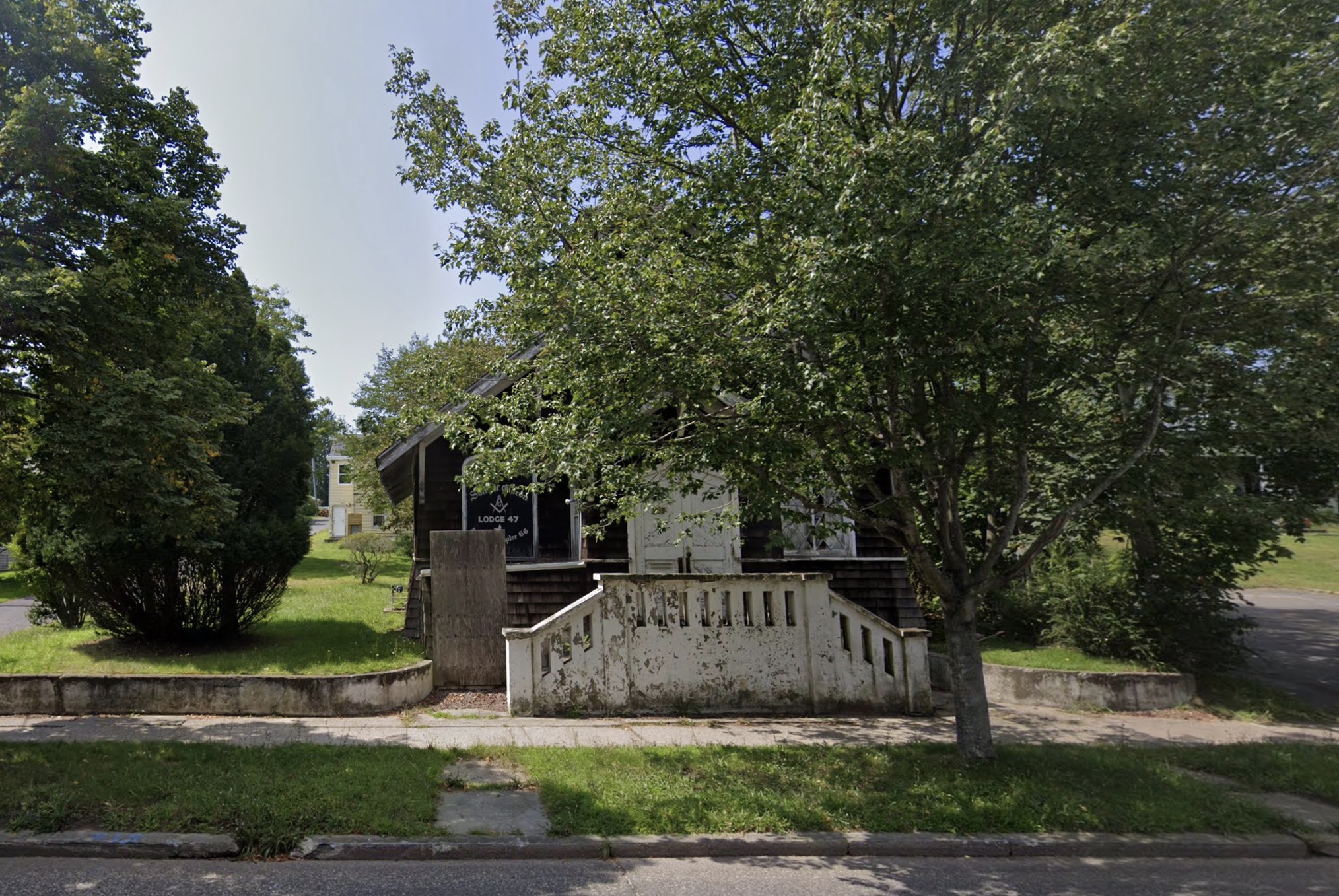
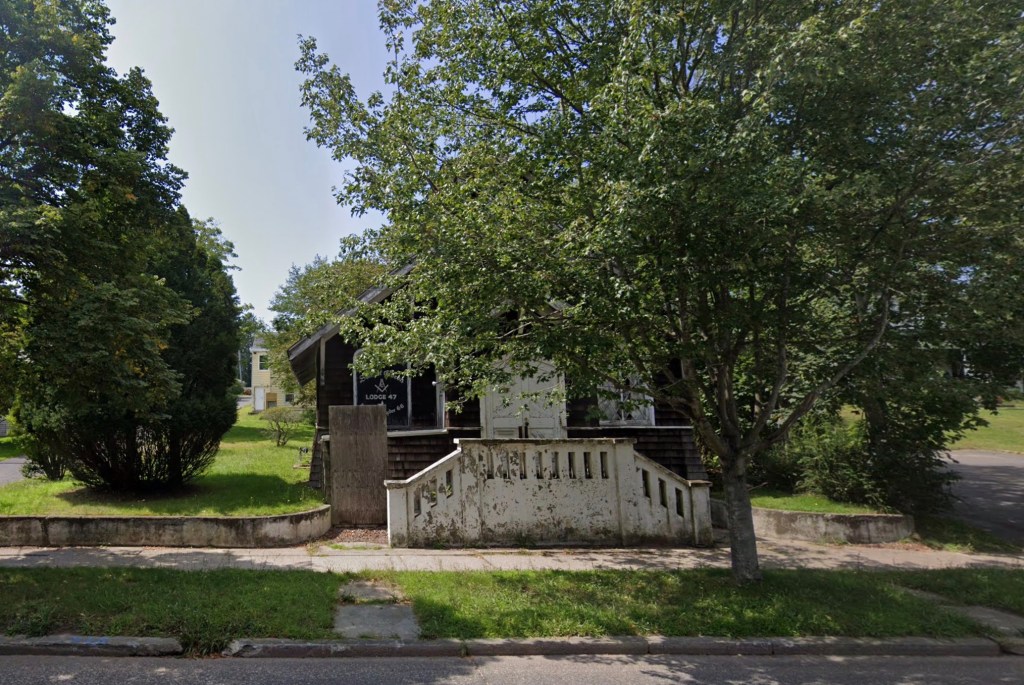
A small but very beautiful little church was built at 209 Windmill Lane in Southampton in 1917. It is there today. But as it is currently abandoned and overgrown, few people take notice of it. Driving by, however, people can admire the Tudor arched doors and windows with their diamond divided light pattern, the louvered bell tower and the decorative window sill which runs completely around the building. One might wonder what it is like inside.
The building, adjacent to the Lola Prentice Memorial dog park and across from Kathleen’s Bake Shop, was built as the Bethel Presbyterian Church during that year, the first year that America was involved in the First World War.
It came about because members of a local African-American family, the Havens, for which a beach is named in Sag Harbor, had been, for many years, going to Sunday services on the Shinnecock Reservation to pray along with the tribal members there. During the 1870s immediately after the Civil War, a former slave by the name of Thomas Ogburn, who became a member of the cloth in North Carolina, moved to Southampton and began preaching to parishioners at the First Presbyterian Church (founded in 1640) for a 3 p.m. service. His gentle teachings attracted not only African-Americans, but also members of the white community and Shinnecock community, their ranks growing as time went by. Said to be soft spoken and dignified, Ogburn passed on in 1899, and, after a time, in his memory, this small church was built in 1917 as the Bethel Presbyterian Church, with a seating of up to about 100 people.
Sometime around 1930, through the efforts of a German woman by the name of Goldie Smith, this little church became associated with the Sons of Gideon as Masonic Lodge #47. Its preacher for many years was Deacon William Pinckney Sr. and the lodge in its later years was known as the Order of the Eastern Star, a Mason’s wives group. In 1965, it officially shut its doors, but the congregation continued on, making it into an occasional social center. Although unable to afford needed repairs, they held meetings there until about 2005. Of course, the Masons continue on elsewhere, teaching the gospel through allegory involving the images of stone masonry and King Solomon’s Church.
In its abandoned state, the building became available for sale for an amount that could not even equal its cost to make repairs – probably in excess of about a million dollars. There were no takers.
But then, in 2007, the Bridgehampton Child Care and Recreational Center, an organization created by the African-American community in the Hamptons which, on a six acre campus on the Sag Harbor Turnpike, provides athletic, after school, child care, a wide variety of educational programs and summer camp, to the marginalized families in the Hamptons. Two years ago, the organization opened and moved into a new 7,000-square-foot administration and classroom building on their campus. There, among three other buildings, they have tennis courts, playgrounds, a garden, a soccer field and basketball court, and are currently raising money for an indoor swimming pool building. For the Southampton church building, the intention is to restore it and offer more services there. Fundraising is underway, and last year they received an important grant. An architect has been hired and Southampton Village has also become involved.
This project is important to me, as I have been a board member and Vice President of the Child Care Center for over 20 years.

 By Dan Rattiner