Manet's Argenteuil: 1874 France Feels Like the East End Today

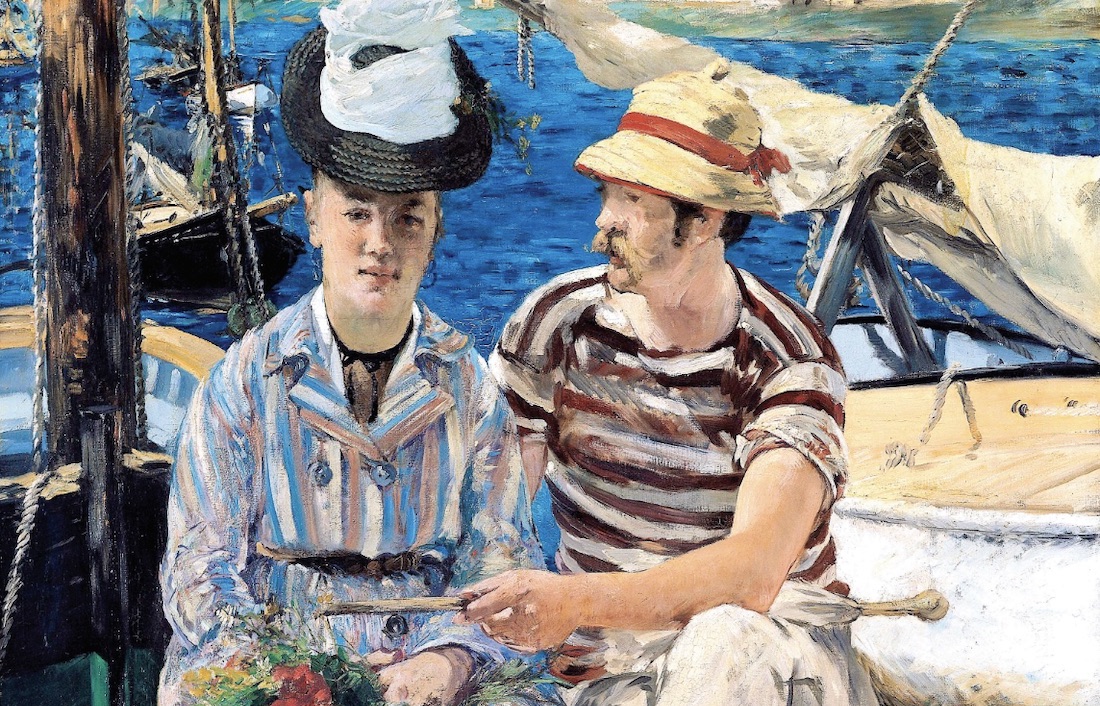
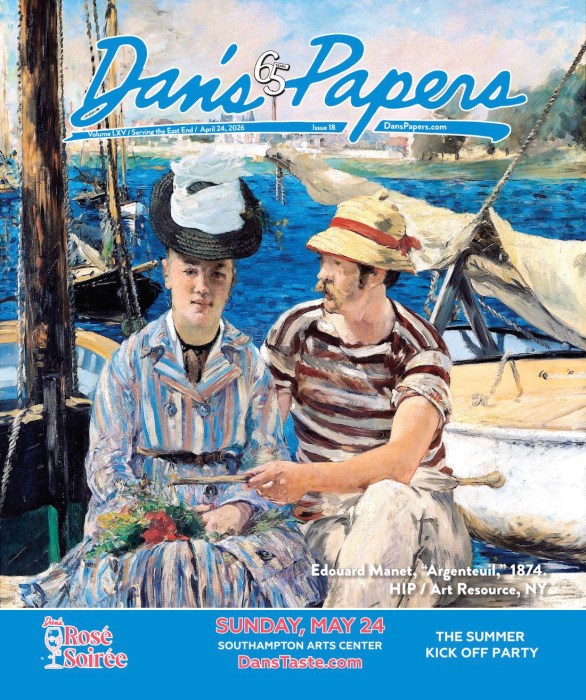
Following our Vincent van Gogh cover in February, on this week’s cover we enjoy “Argenteuil,” a much-lauded 1874 oil painting by another great French master, Édouard Manet.
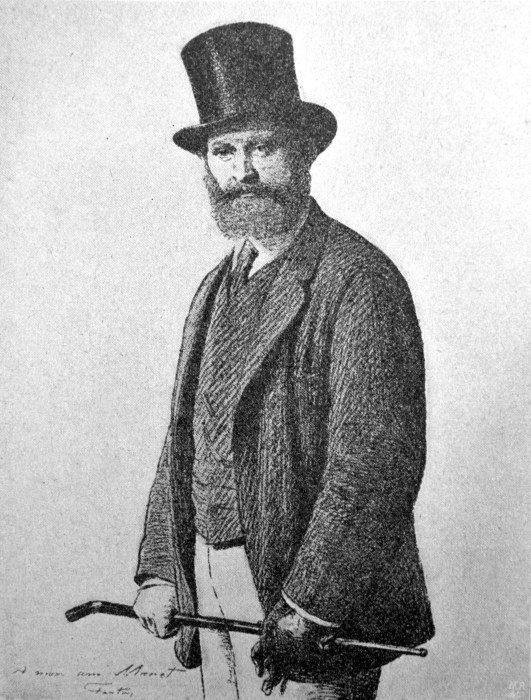
First shown publicly at the 1875 Paris Salon, “Argenteuil” is the artist’s first full foray into Impressionism, the style born in 19th century France defined by its visible, short brushstrokes and trading hard realism for more of an “impression” of a scene based on the light, color and composition. His inclusion in the Paris Salon was a defining moment that delivered Impressionism to the so-called masses of the day, making him something of the poster boy for the artistic movement.
Other Impressionist painters — including Claude Monet, Edgar Degas, Paul Cézanne and Frédéric Bazille, among others — at that same time chose to forgo the Paris Salon, and put their work in a more niche show, which has come to be known as the First Impressionist Exhibition by art historians.
Manet’s “Argenteuil” shows a sailor in his candy striped shirt, parasol across his lap, seated on a dock with a female companion who is holding flowers, assumedly given to her by the boatman who courts her. Sailboats are moored behind them while other boats float and glide in the waters of the River Seine. Past the river, we see the painting’s titular town, Argenteuil, where Manet’s friend and Impressionist contemporary, Monet, had a home. Manet’s “Argenteuil” was, according to art historians and numerous resources, a response to similar scenes by Monet.
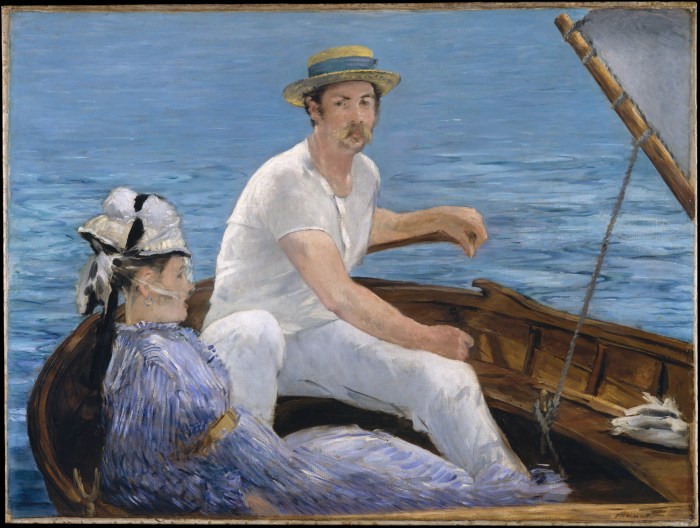
Another Manet painting from 1874, “Boating,” depicts a couple on a boat but it feels quite dim when compared to the lively and masterfully painted “Argenteuil.” Despite the Impressionist style, details abound in “Argenteuil,” bringing forth a composition brimming with life and stunning light. Smoke or steam rises off of a ship in the water where the town and boats are reflected. Everything Manet painted on this canvas feels like it has weight and form.
Manet kept “Argenteuil” until the end of his life. After the artist’s death, his widow, Suzzane Manet, sold the piece to Belgian painter and patron of the arts Henri Van Cutsem, who left it and the rest of his collection to the city of Tournai in Belgium. The painting remains in that city at the Musée des Beaux-Arts de Lyon, a former 17th century abbey with a large collection of art, from ancient to modern, as well as an array of interesting and significant artifacts.

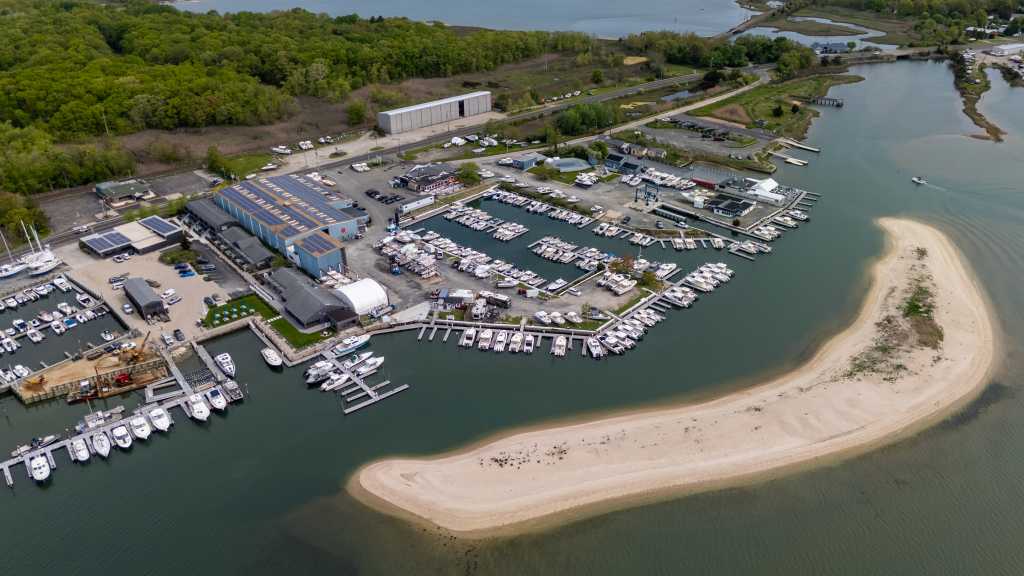
While this cover is a painting of France, anyone on the East End of Long Island, whether in the Hamptons or North Fork, can see the parallels with Manet’s subject. Change the clothes a bit, and this could easily be a historic scene in Sag Harbor or Greenport — perhaps even a contemporary one. Today, the commune of Argenteuil is a suburb of Paris and looks quite different than our bucolic hamlets and villages.
This is the second in a new series of Dan’s Papers covers honoring works by some of the greatest masters in the history of art. The cover images are brought to us by Art Resource, at artres.com.
Vetted Hamptons Resources