Jewish Museum Urged to Help Preserve Historic New Deal-Themed Artwork in D.C. Government Building
 By Marc Horowitz
A growing group of artists, architects, historians, and preservationists is trying to save a trove of murals in a Washington, D.C. government building that has been targeted for “accelerated disposal” by the Trump administration.
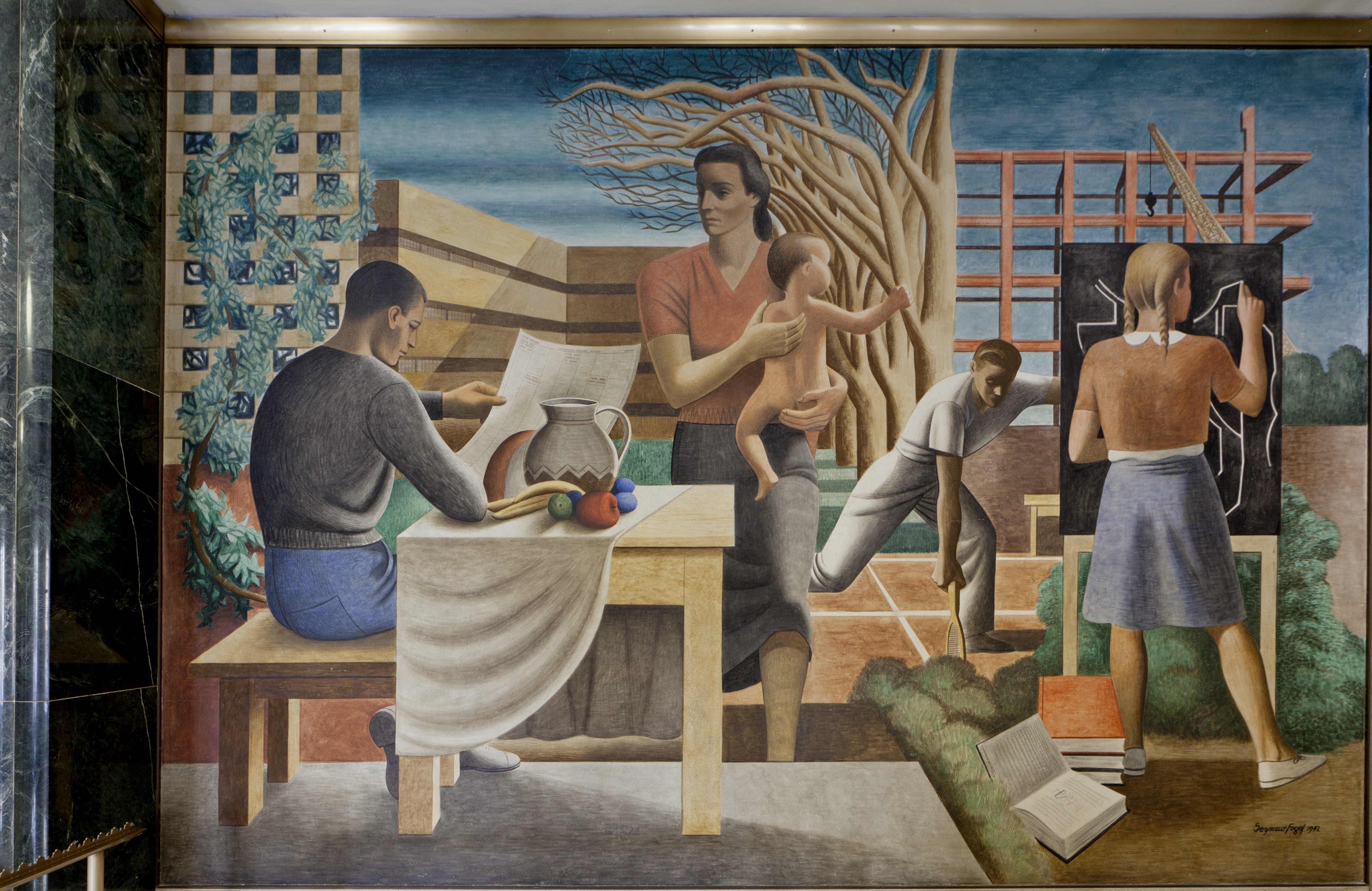
The Wilbur J. Cohen Federal Building has drawn the attention of cultural activists for its historically important New Deal imagery—primarily murals—by Ben Shahn, Philip Guston, Seymour Fogel, Richmond Barthé, and others. Many of the works feature hagiographic imagery that promotes the benefits of the then-nascent Social Security program.
Located just off the National Mall, the Cohen Building has come to be called “Sistine Chapel of the New Deal.” That lofty moniker has resonated, helping bring progressives to the cause while also potentially hardening the administration’s plans to sell it, leaving the fate of the artwork on its walls very much in jeopardy.
“These works, in addition to sculptural reliefs, most chemically bound or carved into the walls, offer powerful reflections on the meaning of Social Security to working Americans,” The Architect’s Newspaper wrote. “The artworks are therefore difficult, if not impossible, to remove.”
Working in parallel with other organizations, the artists Joyce Kozloff, Martha Rosler, and Elise Ensler have become leading voices in the preservation of the Cohen Building. Because several of the artists who contributed to the building’s murals were Jewish, Kozloff, Rosler, and Ensler are urging the Jewish Museum in New York City to get into the fight.
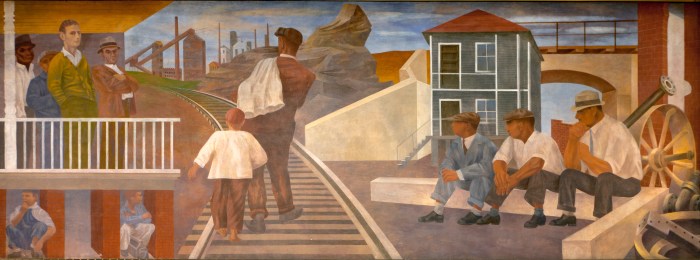
“At least three of the artists whose work is in this building were Jewish—two of whom, Shahn and Guston, are not only canonical artists but integral to the Jewish Museum,” the women write in their letter, which at our press time had been signed by approximately 400 prominent figures from the art world. “We believe that a response from your institution, with its remarkable history and prestige, would have a powerful impact on the decision-making process.”
Wary of wrapping its arms too tightly around a political football, the museum’s response has so far been sympathetic but careful.
“The Jewish Museum, like all other collecting museums, is deeply committed to the stewardship of art and architecture as part of our shared cultural legacies,” director James Snyder said in a statement. “We have been attentive to this issue since it emerged, and we stand with other art world leaders, artists, and preservationists in advocating for the protection and preservation of these historic murals, while we also work to advance further strategies to ensure their safekeeping.”
Constructed in the early 1940s, just before the U.S. entered World War II, the Cohen Building was originally intended to house the offices of what would become the Social Security Administration. Instead, it was initially used for war operations. After the war ended, the Federal Security Agency (which administered Social Security) moved in.
Currently closed to the public, it most recently served as the headquarters for Voice of America (VOA), the international broadcaster established in 1942. VOA has since been defunded, which is part of the government’s rationale for selling the building.
The historian Gray Brechin heads up an advocacy group, Living New Deal, which has mounted its own campaign to preserve the building and its murals. As of late February, Brechin’s California-based group said it had collected over 8,500 signatures to a petition it created calling for immediate action to halt the pending sale.
“The Cohen Building is more than stone and paint–it is a living testament to America’s shared values, social progress, and the power of public art to uplift us all,” the petition notes. “Today, this national treasure faces an alarming threat. As powerful interests move in haste to sell this historic building, we call for the process to be paused and conducted with transparency, respect, and public participation.”
The General Services Administration (GSA) owns and operates the majority of United States federal office buildings. Identifying the Cohen Building as an asset marked for accelerated disposal indicates that the government plans to sell the property to a private buyer, likely within the next few years. The building has about 1 million square feet of office space, but preservationists think the most likely scenario would be for a developer to tear it down rather than renovate it. It would be shocking and utterly out of character for the current incarnation of the GSA to mandate preservation of the artwork as a condition of the sale. Given the time and money necessary to preserve the murals on the wall and the fact that it’s questionable whether they could be preserved at all, the most likely scenario would be for the art to be lost with the building.
If past is prologue, efforts to preserve the Cohen Building may very well turn out to be a quixotic undertaking. The current administration has shown a proclivity toward destroying first and asking questions later. Since the artwork in question pays homage to Social Security in particular and FDR’s New Deal progressivism in general, this particular cause is unlikely to find a quorum of sympathetic preservationists among the right-leaning decision makers who hold the fate of the artwork in their hands.
While they may well be tilting at windmills, activists aren’t ready to go down without a fight.
“We do not consent to the sale of our heritage behind closed doors,” Living New Deal’s petition says. “We ask that historic preservation laws be respected, that transparency be upheld, and that this vital piece of American history be saved for future generations.”
Vetted Hamptons Resources