70 Years Later: Remembering the Hamptons of 1955
 By Dan Rattiner
My dad moved me, my sister and my mom out to the East End of Long Island in 1955 when I was a teenager. The East End was very different back then, not only from what it is like today, but what it was like back then in Millburn, a middle-class suburb in New Jersey where I grew up in a nice house on a nice block in a nice neighborhood.
World War II had just ended. Dwight Eisenhower was the president. Dad worked for a cosmetics company and went off to work in a suit and tie five days a week. Mom cooked, cleaned and raised us kids. I played with the kids on our block. And in the evening, we watched the evening news on a big wooden console with a small black-and-white TV screen.
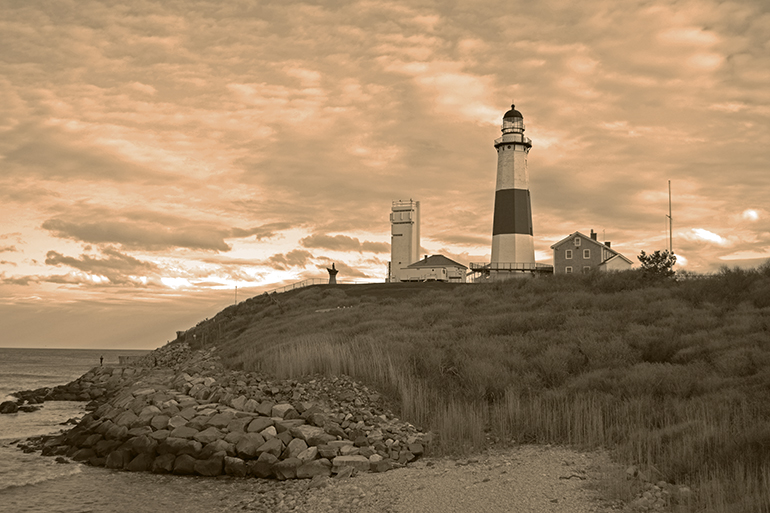
The Hamptons back then, on the other hand, was wild and windswept. There was the ocean and the woods, beaches, ponds, dirt roads, potato farms, and small towns from the 17th century still standing, some with windmills, separate from one another down country roads five miles from one another. People hoped that enough tourists would come out weekends in the summertime with enough money to get everybody through the long, cold winters.
To get here, you drove out from the city on narrow roads. Huge billboards lined the Montauk Highway. They advertised fishing boats and hotels, restaurants and nightspots. Weekdays were quiet. A dog could go to sleep on the white line in the middle of Main Street on weekdays. And the stores were closed on Sundays. People went to church. Saturday was the big shopping day.
My dad brought us here because he felt he was in a rut. He bought a pharmacy in Montauk. Joined the fire department. My little sister was given a horse she stabled at the Deep Hollow Ranch.
We had a regular telephone line back in Millburn, but here there was a choice. You could get a party line. Pick up the phone to make a call and there might be somebody else on it. Party lines were cheaper but we got a private line you could dial. One in the kitchen. One in the living room.
Our phone number was 2357. But then they added a prefix before the 2357. So now you had to dial MO 8 – 2357. The letters were on the dial with the numbers. MO 8 stood for MOntauk 8. There was EAst Hampton 4 and SAg Harbor 5 etc., etc. (668, 324 and 725 are still treasured today.). The operator had to connect you to New York City, an expensive long distance call.
Back in Millburn, we had 12 channels to choose from on TV, all based in New York City. Here in the Hamptons when we got here there were just three channels. One in Hartford, and two in Providence. All with local news from New England.
Everyone read magazines and newspapers back then. On Sundays, Montaukers came to my dad’s store and picked up one or more of these: The New York Times, New York Post, New York Daily News, New York Journal-American, Herald Tribune, New York World-Telegram & Sun or the New York Daily Mirror. There were local weeklies for local news. Time and Life were the most popular magazines.
People living in the Hamptons belonged to very distinct groups. And each group kept to itself. This was very different from where I grew up. Millburn was populated with white people. That was it.
There were fishing boat captains and their mates in Montauk, African Americans in distinct sections of East Hampton, Bridgehampton, Sag Harbor and Southampton, New York City intellectuals and artists living as expatriates full time in the woods of Springs and Amagansett, potato farmers with ancestry going back to the 17th century and more farmers who came from Poland living in Riverhead and Bridgehampton. There were blue-collar workers from Italy and Ireland living in Sag Harbor, professional people and local white-collar workers and war veterans in every town, Jewish people who for the most part owned retail shops and motels, also Bonackers — baymen whose ancestry went back to the early settlers from England.
Add to this mix a big summer crowd of Broadway show people, socialites from the Upper East Side of Manhattan living behind hedgerows in oceanfront mansions, Wall Street executives in Southampton, garment industry people in Westhampton Beach, Madison Avenue people in East Hampton and movie stars from Hollywood tucked away here and there. Also authors, journalists and editors.
In Southampton there was a tribe of Native Americans living on a reservation. “Keep Out” signs warned you to not to enter. Enter and be escorted back off.
As for people from south of the border, well, back at that time, there weren’t any. There weren’t any environmentalists either.
What I found absolutely fascinating was that all these different groups — 20 or more — all had their needs and agendas that in a polite or impolite way clashed with the needs and agendas of everybody else. It was fascinating. And I decided to be a part of it. I guess also because I found the land and the ocean and the forests and ponds, landscapes, harbors and bays just so damn beautiful.
Was it better then than it is today? Today we’re a world-class resort with real estate prices through the roof. We’re behind hedgerows with alarm systems and swimming pools while we enjoy a blizzard of cultural activities such as art shows, fundraisers, horse shows, festivals, fine dining, parties, fashion shows, sports events, demonstrations and the ubiquitous cellphones that connect, entertain, and often give us fake information.
And we also get locked doors, shootings, poverty, floods, fires, homelessness, isolation, and numbness about what’s real and what’s not, as well as brilliance and enthusiasm for new ways that are pretty damn exciting.
Was it better then?
Fifty million people died in the Second World War. It’s tough to say that those were the good old days.
I think it’s apples and oranges. Take your pick.
Vetted Hamptons Resources