A Hamptonite Finds Hope on a First Trip to Israel

Sammie Orih has, like so many people, followed what’s been happening in the Middle East through the news and the narrow window of media and TV. He has watched a procession of tragedy punctuated by moments of hope including horrors and hostages. Like millions of others, he read about Israel and Gaza. While he couldn’t travel to Gaza to see the cavalcade of calamity, he recently decided to travel to the region.
Orih decided to find out for himself, as much as possible, what life is like in Israel amid the barrage of news from the region. What he found surprised him, from residents’ diversity, including religion, to a nation filled with memorials to recent events that, while they may be yesterday’s news for many, exist not only as words on pages but ongoing reminders that yesterday’s attacks remain very much stamped across the minds, and on the map, of that nation.
Orih believes misconceptions, as well as myths, are rampant regarding the region, or at least related to life in and people in Israel. He found a nation, and a world, different from what he expected almost from the moment his plane landed on the runway.
“I was told, you’re going to Israel, as soon as you get off the plane, they’ll point guns at you,” Orih, a Westhampton resident and associate publisher of Dan’s Papers, said. “They gave me the impression it would be a hostile environment. When I got down from the plane, I got my bag and went through immigration. Everything was automated.”
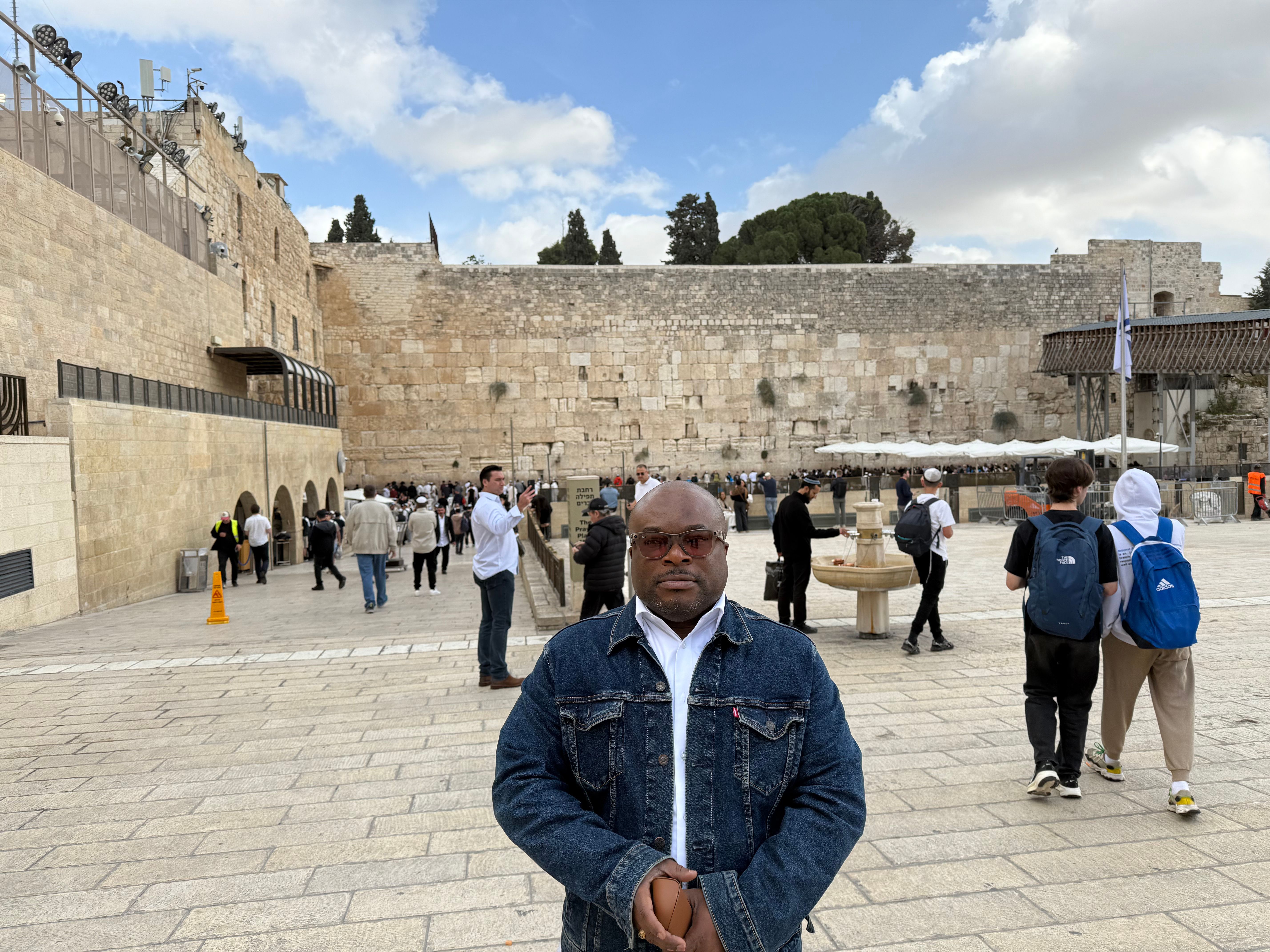
Orih arrived after a more than 10-hour flight, a little jet lagged and staying at the King David Hotel in Jerusalem, soon traveling to places such as Yad Vashem, a Holocaust museum, in Jerusalem, and the Western Wall, where he saw not signs of division, but a kind of universal unity.
“Muslims, Jews and Christians were praying at the wall,” he said of a moment showcasing not conflict, but connection. “Everyone was out there.”
While there are Jewish, Moslem and Christian quarters in the old city, he said he saw people from around the world, such as India, on pilgrimages, as well as from China.
“There were people from different parts of the world in the old city of Jerusalem,” Orih said. “It was my first time. It was eye opening.”
He visited the Knesset where he looked through a glass wall as Israel’s version of Congress went about governing.
“Their parliament is beautiful,” he said. “You can see through glass what they’re doing.”
He saw the Al-Aqsa mosque where Muslims worshipped and spent time with the Bedouins and Druze, who were welcoming.
“I was eager to find out how they feel about living in Israel,” he said of a diverse nation. “They feel proud and comfortable.”
He enjoyed dining in Tel Aviv, a modern city filled with scooters and cafes as well as a boardwalk and beach.
“The food in Israel is good and healthy. I tried everything possible,” he said. “We saw a bit of the Tel Aviv nightlife. It’s a city that doesn’t sleep.”
In addition to Israeli restaurants, he saw some with an American flavor, such as Mike’s, on the Tel Aviv boardwalk, facing a beautiful beach.
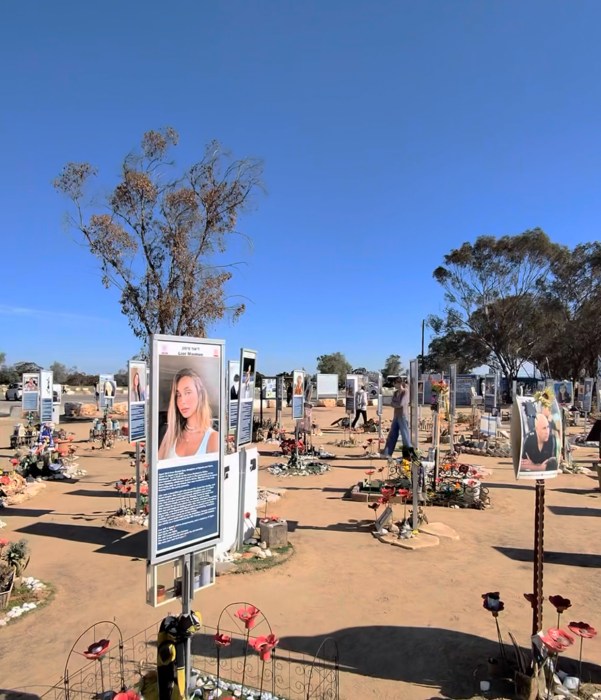
He then went on to the “Gaza envelope,” visiting the site of the Nova Music Festival, where the October 7, 2023 attack occurred, as well as nearby kibbutzim.
“It wasn’t just us. There were other people there. It became a memorial,” Orih said. “People are trying to honor their loved ones. They go out there.”
He saw large photographs of people killed there, images on poles, frozen moments showing people before their lives were ended. And he met and was given a kind of tour of this site of tragedy by a survivor who virtually traveled back in time with him.
“She told us what it was like that night,” ‘he said. “It was like a rain of bullets from left, right, up, down, from every angle. That was all she could hear.”
She had been injured by a gun butt that struck her head, which, in retrospect, may have saved her life, making it easier for her to hide and blend in with the bodies of the dead.
“She was bleeding. With her head and the bleeding, she fell on top of other bodies of people who had been shot,” Orih said. “When they saw the bodies mingled with blood, they tried to move them around. They left her alone.”
Although he didn’t suggest this, that moment bears an eerie similarity to the Holocaust, memorialized at Yad Vashem, where some people posed as corpses to survive attacks, when bodies were piled up after mass shootings before concentration camps.
“It was an hour or two hours, crawling on the ground, trying to find other survivors,” Orih said of that woman, in her twenties. “It took a long time for help to come for her.”
Orih said, to Israelis, that attack is not a moment or a memory, but an enduring event.
“People were in bed sleeping, young people, kids,” he said. “They went in there and destroyed everything.”
While many cars from the site of the attack were later parked along highways, as national reminders and symbols of mourning, Orih saw a car cemetery at the site of the festival, including a white car riddled with bullet holes looking a little bit like the vehicle in which Bonnie and Clyde were killed.
A kind of parking lot was packed with cars, riddled with bullets, that once belonged to Israelis killed that day, often in their car, not simply forming a cemetery of cars, but with vehicles like tragic tombstones to lives taken in one day.
“This is not something someone is making up,” Orih said, noting some people believe the horrors were exaggerated or manufactured. “Those are the people who were in it, who died in it. The cars were wrecked in the middle of the bombing and the shooting, the missiles.”
He met a female soldier who lost her brother and other family members at a nearby kibbutz which he also toured.
“They took us to the houses where they used to live,” he said. “Some of them were blown away beyond recognition. The attacks were so massive.”
Orih quietly showed photographs of Gaza seen from the site of the music festival, quiet and eerily close on the other side of a fence, although with a military presence, not visible in the photographs. If good fences make good neighbors, weak fences make big risks when a war is smoldering or starting.

“From the kibbutz, you can look into Gaza,” Orih said, showing a picture of a seemingly placid green field. “That’s how close it is. That’s how they were able to attack.”
He visited nearby Sderot, which found itself part of Israel’s Ground Zero for this attack and has become known as the “City of Hope.”
“Sderot is a thriving city,” he said. “Everything is there. Everything is normal. People were not angry. I didn’t meet anyone who was angry.”
Orih met tourists, as well as people moving to Israel, although he didn’t find out where they were headed. Some critics worry Israel is settling territory that could lead to further conflict, but Orih simply said he met people seeking to move to that nation.
“Some said their grandparents came to America,” he said of one woman moving to Israel. “Now they’re coming back to Israel.”
Orih said Israelis he met distinguished between Hamas, which spearheaded the attacks, and the Palestinian people.
Some may note that many Palestinians have supported, and still support, Hamas, but Orih said those he met were careful to draw distinctions.
When Orih flew home Dec. 5, after a roughly-one-week visit starting Nov. 29, he believed he saw at least through a narrow window into life within Israel. He traveled to the Golan Heights, but never went into Gaza, or got a chance to see what life is like in that war-torn region.
Orih instead described his trip as one to an area with “beautiful fall weather” and remembers standing from what is called “the balcony of Israel,” as he saw across the nation’s 42-mile width.
“You stand and you can see the whole of Israel from the Jordan Valley to the sea, the river to the sea,” he said of a small nation surrounded by so much sorrow, but also filled with so much beauty. “You can see from east to west.”
He flew home, leaving behind a small country with a better sense of its life, believing there is more to this nation and the region than what’s in the news. He also left, after seeing and hearing about horror and joy, hoping that one day peace, not war, will be the way that life in the region is defined rather than by horrible moments and memorials here and in Gaza.
“None of the survivors mentioned the Palestinian people or Muslims or Arabs,” Orih said. “They always said it was Hamas that attacked. They’re not trying to bring hate to Palestinians, Arabs or Muslims. The survivors never said anything about hating or being vengeful. There’s a longing for peace.”
Vetted Hamptons Resources