Off the Beaten Path: A New York City Christmas Guide
 By Emma Fiona Jones
The Christmas season is a dizzying mélange of nostalgia and novelty, classic and kitsch — and nowhere is this more true than in New York. But beneath all the noise are dreamy worlds full of lifelike dolls and dormant gardens, farm-fresh fruit and fruity art, each promising to leave you in the Christmas spirit.
New York City Christmas Guide
Support Your Local Farmers Without Traveling Over the River and Through the Woods
Union Square Greenmarket
Lower Manhattan
14th St. and 4th Avenue / Park Avenue S.
One of New York’s best-kept secrets (okay, it’s not at all a secret) is that you can get local, just-picked produce year-round. Open Mondays, Wednesdays, Fridays, and Saturdays, the Union Square Greenmarket features a profusion of fresh fruits and vegetables, artisan breads, cut flowers and plants, honey, jams, and more—everything you could need for sustainable and original holiday feasts and gifts.
Exquisitely packaged elixirs and tinctures—made from organically grown herbs at Furnace Creek Farm— make nourishing and elegant presents for everyone on your list. Hosting a Christmas party but can’t stomach a fight to the death for the last bag of flour at Trader Joe’s? Pick up some snickerdoodle cookies from Wave Hill Breads, or a crackly ciabatta loaf from Bread Alone Bakery. Add some flair to your front door with wreaths made of dried flowers, grains, and grasses from the River Garden Flower Farm.

Set the Bar High
The Morgan Library & Museum
Midtown
225 Madison Avenue
The gilded grandeur of the Morgan Library alone elicits the sense that you’ve stepped into a New York that has never known the Brooklyn Tower or the Vessel. Still, around the holidays, there’s an added draw: Every year, the Morgan exhibits the original manuscript of Charles Dickens’ A Christmas Carol, turning a page a day.
Dickens presented the completed manuscript—bound in crimson Morocco goatskin leather—to his close friend Thomas Mitton, who had lent him money that fall. His name, as well as a sparsely elegant frame, is stamped in gilt on the cover.
Go Window Shopping in an Artist’s Mind
Below Grand
Lower East Side
53 Orchard Street
If the past year has left you with no patience for Love Actually and lusting for John Waters’ tinseled electric chair instead, pull on your stockings and head over to the Lower East Side gallery named Below Grand.
Featuring the work of Christopher Gambino and curated by Jesse Firestone, The Christmas Show exhibition is more in the tradition of Greer Lankton’s shop windows at Einstein’s than Breakfast at Tiffany’s or the light show at Saks. Gambino’s show press release reads, “seizes this form, twists it, and casts himself as the eternal understudy in his own spectacular demise: the life of an artist, the life of a star.”
Fifth Avenue will never feel the same again.
Escape the Holiday Mayhem for a Moment of Reflection
The Gardens at St. Luke in the Fields Church
Greenwich Village
87 Hudson Street
The Gardens at St. Luke in the Fields Church in winter have always felt Christmas-y to me in a Djuna Barnes sort of way. With its spindly cherry trees, frostbitten ivy-covered walls, and rose garden marked by the charred ruins of the former parish hall, it exudes the aura of a place often visited by spirits, though none of them unfriendly.
St. Luke in the Fields Church, built in 1821, holds a key place in local history. In the 1980s, it was one of the only churches in New York willing to perform Christian funerals for those who died of AIDS, which devastated the Village.
The gardens are privately owned but open to the public. In the summer, their abundance of berries and flowers draws a dizzying array of birds, moths, and butterflies; by Christmastime, their stark beauty is far quieter but still slices through the holiday din in the streets outside.
Jeté into a Wonderland with a History as Fantastical as Its Fiction
The Nutcracker, New York City Ballet, David H. Koch Theater
Midtown
20 Lincoln Center Plaza
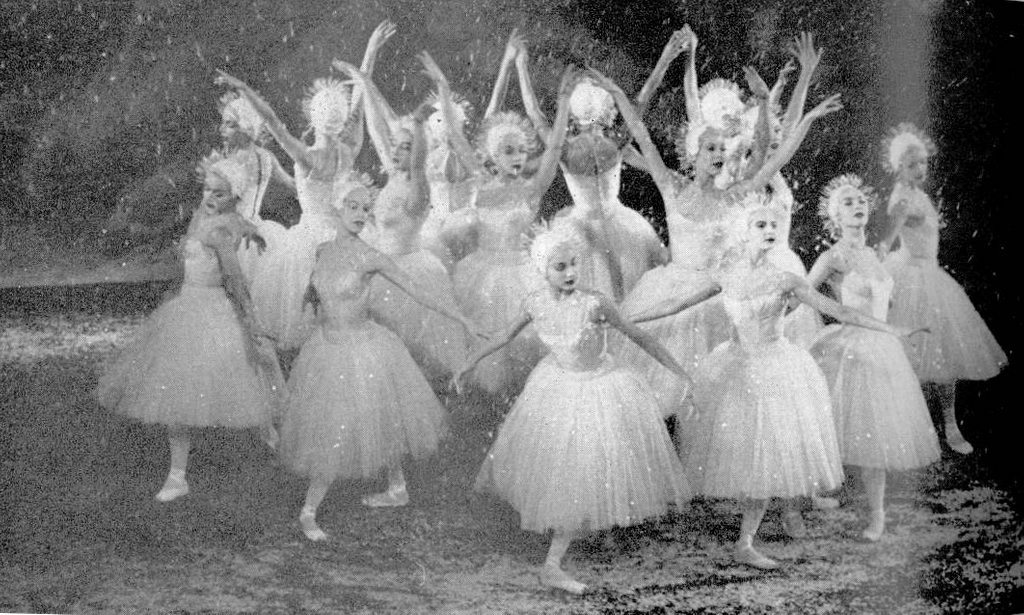
The Nutcracker is based on E.T.A. Hoffmann’s 1816 fairytale The Nutcracker and the Mouse King. Hoffman’s story ends with Marie disappearing forever into the doll kingdom to care for her specter-prince. Tchaikovsky’s ballet premiered in 1892, one week before Christmas, at the Mariinsky Theatre in Saint Petersburg, Russia (tickets were sold out; critics were unimpressed). At the onset of the 1905 Russian Revolution, dancers in the Mariinsky Theatre fled Russia, scattering across Europe and introducing Russian art and culture, including The Nutcracker, to the West. The ballet only became an American Christmas classic in 1954 when George Balanchine, with his new company, New York City Ballet (NYCB), resurrected the story he had learned as a young student at the Mariinsky Theatre.
Vetted Hamptons Resources