Riverhead Painter Adam Straus Talks North Fork Cover & New Show

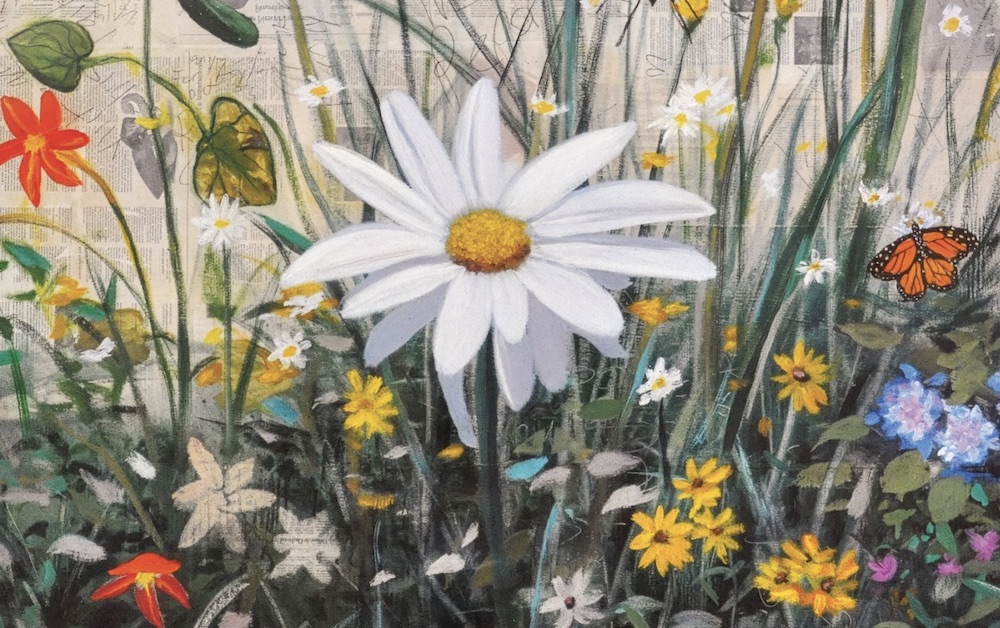
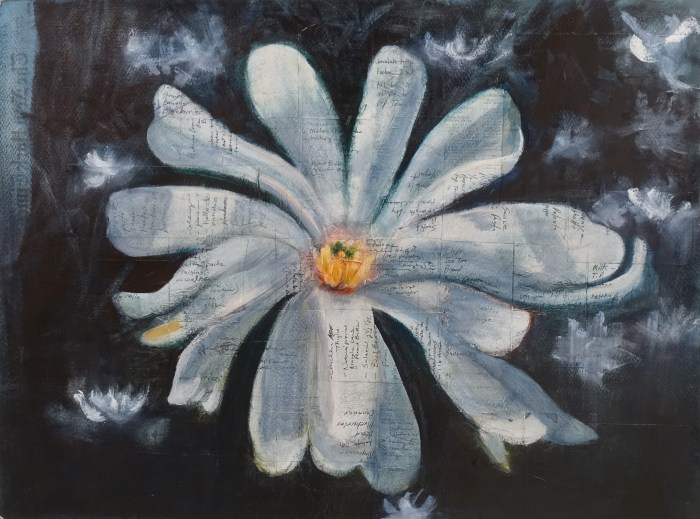
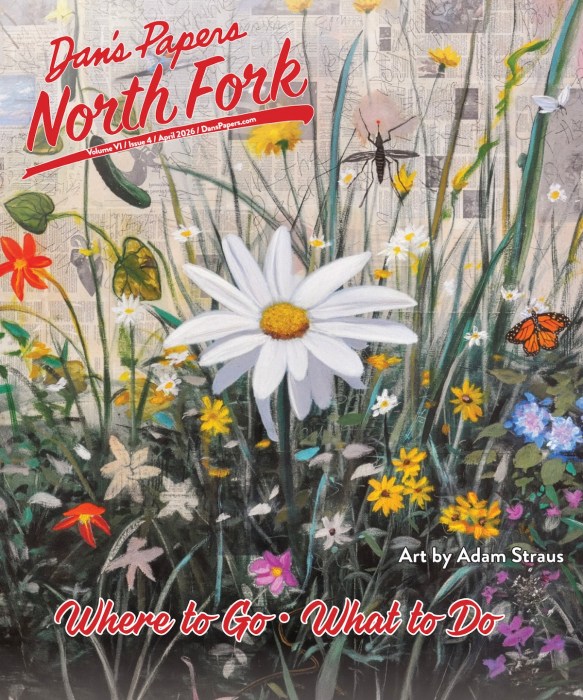
Our April Dan’s Papers North Fork cover artist, Riverhead painter Adam Straus, discusses his painting “Old News: in the Garden,” his connection to landscape, the environment, and the North Fork, where he lives, works and often shows.
Straus has a solo show, Bananas & Other Matters, opening this Friday, April 24 from 5-8 p.m. at the North Fork Art Collective in Greenport (207 Main Street). The show will remain on view through mid-June. Visit northforkartcollective.com for more info.
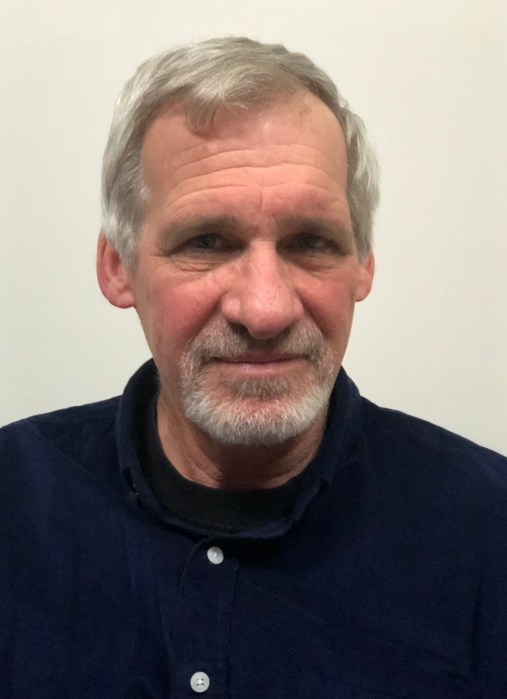
A Chat with Adam Straus
Tell me about this painting. What inspired it and how was it painted?
“Old News: in the Garden” from 2017 was inspired by the miracle of the Long Island spring in our yard. It is among the first in a body of work that contrasts our day-to-day saturation of news and our mundane activities with the beauty of the natural world. It was the beginning of a much more experimental and looser way of working. The underlying surface was covered with newspaper transferred and adhered to the canvas and then painted over with images of plants from our garden as well as birds and insects.
The flora and fauna are growing vigorously out of what is generally bad news. This painting is currently in a group exhibition, 250 Years of Art on Long Island, at the Nassau County Museum of Art curated by Franklin Hill Perrell and Alex Maccaro.
This cover painting is one of a number of styles in your artistic repertoire. Can you talk about your exploration of different approaches and subject matter?
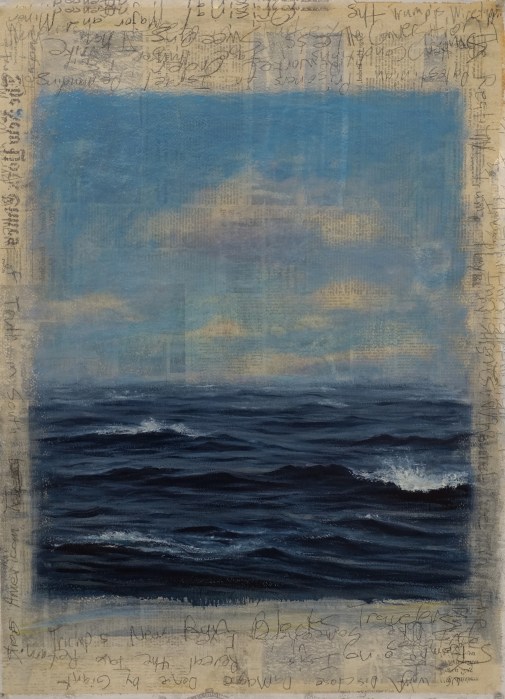
Everything I have painted over the last 40 years has been rooted in landscape. I have used the traditions of realist landscape painting, mostly the Hudson River School, the Luminist painters, and Impressionists, twisting those traditions to comment on our contemporary environment, landscape, and world.
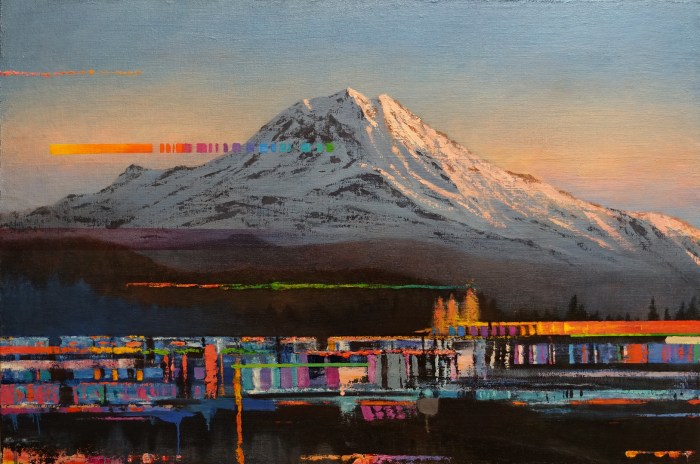
I also have used digital glitches and pixelation to render a deconstructed landscape as a metaphor for man’s devastation of the environment. My process begins with the creation of a landscape and then continues with a depiction of damage. I go back and forth between majesty and destruction to symbolize what human presence is doing to the landscape. One constant is that I have always added satire, humor, and narrative that critiques what man has done to the natural world.
You have a show opening with North Fork Art Collective. Can you tell us about it?
Kara Hoblin of the North Fork Art Collective in Greenport has been so supportive of artists and the arts on the East End of Long Island. She’s been a real force on the scene for over 10 years. We had been talking about doing a show a few months ago, that comes out of what I’ve been doing over the last eight years, and it’s come together so well.
You’re based in Riverhead. How has the region and community here affected your work and career?
A large part of my work is inspired by the water, woods, light and atmosphere of the East End of Long Island. Beginning in 1995, my wife and I would come out to the East End before we were married; and we began fantasizing about being able to live here. I was completely blown away by the light.
Even though I paint the sublime of our national parks and mountains out west, I have always been grateful to come home to Long Island. The monumental rocks sticking out of Long Island Sound for 20,000 years have been incredibly influential. I’ve done large charcoal oil stick drawings of them, a couple of which are in the show.
Do you have any other shows or projects underway or coming up?
Next, my work will be in the Long Island Biennial at the Heckscher Museum of Art, opening May 16.
Where can people find your work online and in-person on a more permanent basis?
My website is adamstraus.net, and there is a monograph you can find at bookshops and on Amazon.
Do you have anything to add?
The older I get, the more I am amazed at the beauty of the natural world surrounding us. Every year the miracle of spring brings an unbelievable feeling of rebirth. Occasionally we get to leave our habitats and really get out in it, so to speak, away from human intrusion where you can hear the inside machinery of your mind in the quiet. And when that happens, you begin to realize just how silly we often are. It humbles you and puts us in our place. I think that this sense of being immersed in nature is being forgotten and is harder to find, which disturbs me and fuels my work.
Vetted Hamptons Resources